Hey, everyone! I’ve just gotten back from a week-long diving trip along the Andaman Sea. We visited the Similan and Surin Islands, including the world-famous Richelieu Rock and Koh Bon. It was my first diving liveaboard since getting certified on the Great Barrier Reef and I have to admit, it was a great way to follow up.
A few housekeeping things:
1) If you’re interested in my art, have a look at my merchandise on RedBubble!
2) If wanting to read my first novel, Eclipse Me, you can find the link here.
3) Leave a comment at the bottom of the page and tell me what you think of this post!
From Khao Lak to the Sea
After a brief stay in Khao Lak, and a late-morning adventure that I will write about in the next blog post, I waited at Sea Dragon Dive Center to begin my seven day liveaboard. The first night didn’t include any diving and was strictly for the purpose of getting on the boat and riding out towards our first diving destination.
Around 6pm, our group of 20 people were given a quick briefing before boarding our bus to the pier. Because we were departing from the north pier, we had a little over an hour to drive. I had no idea it was going to be so far! The crew packed our belongings onto the bus. Part of me was hesitant to part with any of my things due to the crew in Cairns leaving my backpack behind… eek! But luckily, everything ended up being fine this time around.
I spent the entire bus ride chatting with Karli, a fellow American from Ohio who was on a multi-month adventure around Asia before settling in Costa Rica for the forseeable future. I find that the closer I am to leaving Asia, the more Americans I have been bumping into, including those from the Midwest. That was something I never experienced for majority of my three years abroad. Suddenly, they’re all popping out of the woodwork!
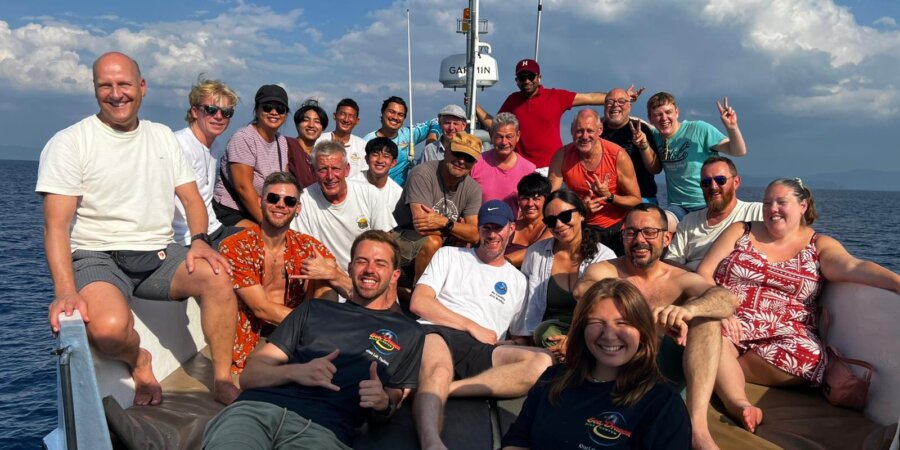
Due to interesting conversation, the bus ride went by in a flash. Before too long, we were off the bus, transferred to a dingy, and then boarding the MV Andaman, our home for the next seven nights. Once aboard, we were shown to our rooms. I was in the dorm area which I thought was going to be awful but actually the setup was pretty nice.
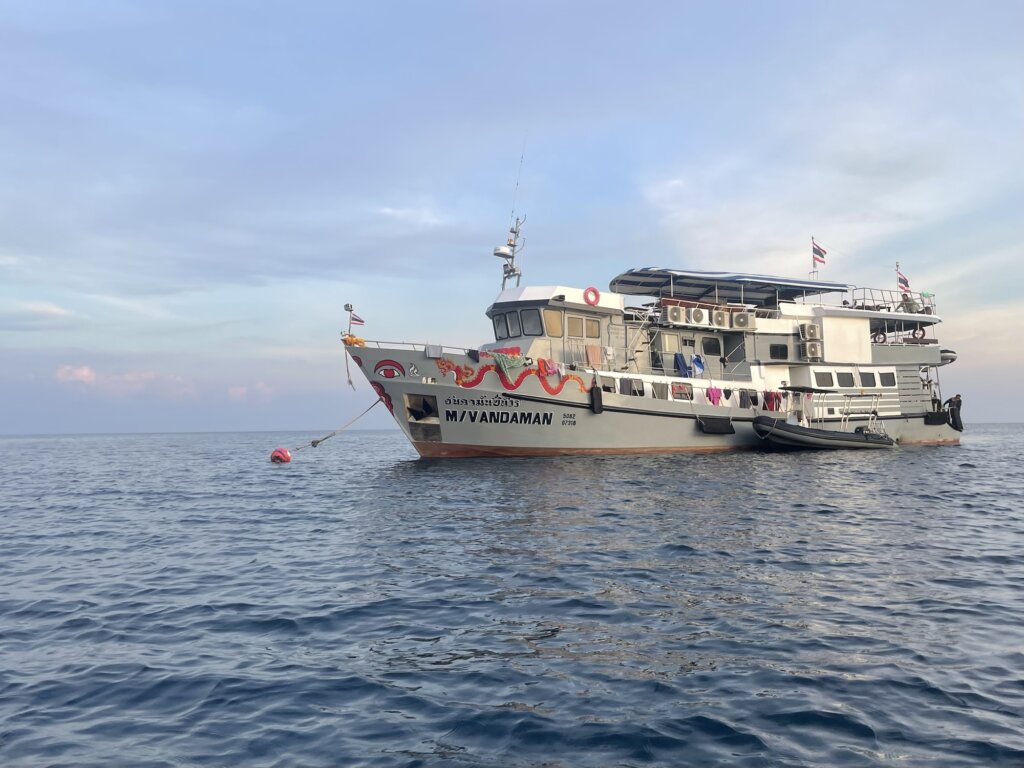
Overall, the ship was exceptional. The bottom level had all our dive equipment port-side, in addition to everyones’ cabins. The middle level had the dining/briefing area, stocked in perpetuity with bananas, clementines, and biscuits. Stairs led up to the top level, with mats at the front for sunbathing, a shaded area in the middle with hammocks and bean bags, and another sunbathing area in the back. It was a great ship!
After we got comfortable, we were invited to the dining area for our first briefing. Karlos, the dive supervisor for the first leg of the trip, gave us a safety overview of the boat, told us where everything was, etc. He then explained details of the trip. While I had signed up for a seven day trip, it was essentially two trips broken up. One was a three day trip, followed directly by a four day trip. Some people would get off after the first trip, some would stay on for the second trip, and others would even continue on to make a total of an 11-day trip. Insanity! One guy from the Netherlands, Patrick, was doing just that.
We were urged to get some rest, because the next morning and all those subsequently, would be early rises. AKA 6.20am. EEK! Could be worse.
After Karlos finished his brief, my dive guide for the first trip came to chat with me and the others in my group. Pang was our guide, a local who grew up a few hours to the east of Khao Lak. I had two others in my group – Sonne and Wulter, a couple from the Netherlands. (A lot of people from both the Netherlands and Germany while on this liveaboard!)
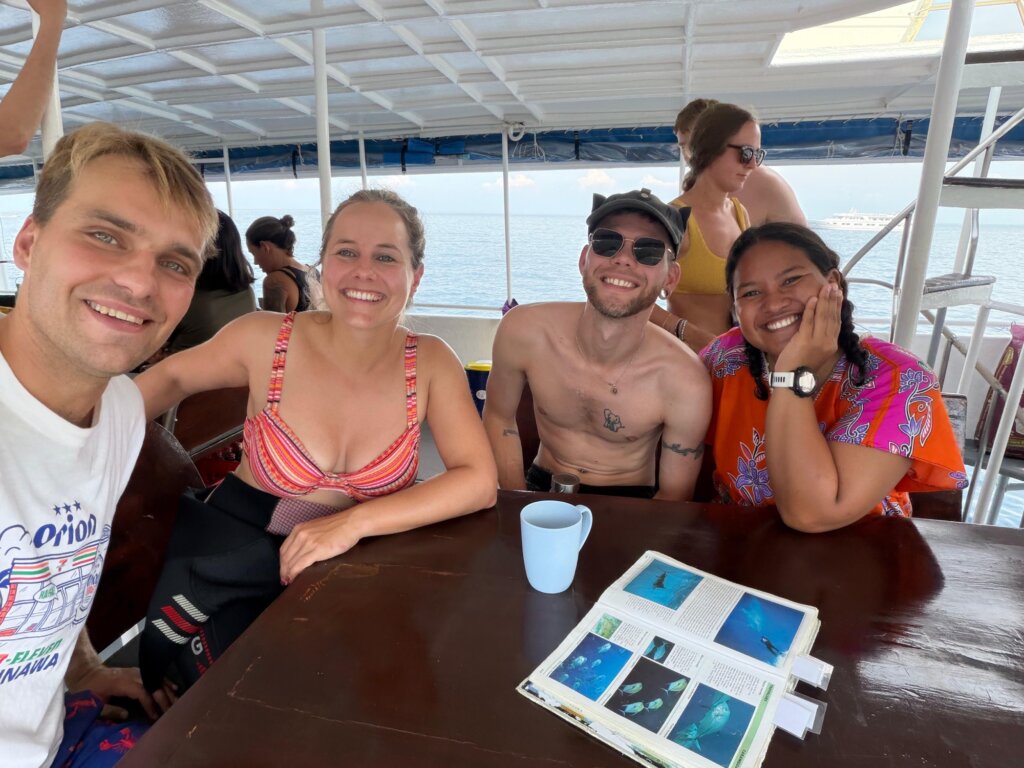
Pang gave us a brief overview of our itinerary over the next few days. Essentially, we would be doing five skills under Pang’s supervision in order to grant us our Advanced Open Water certification. Prior to the liveaboard, we had a few hours of studying to do on the PADI website. I had done them back in Chang Rai a little over a month ago but did a brief review prior to the liveaboard.
The skills we would be going over with Pang included: deep diving, underwater navigation, fish identification, drift diving, and night diving. I would have preferred to replace fish identification with buoyancy control but alas.
I wasn’t able to fall asleep very easily that first night – I was too excited to begin my diving adventure. Ahead of me, I had 22 dives in 7 days. That’s A LOT of diving. Was I up for it? Absolutely. This would be my final underwater adventure in Asia (for now) and I wanted to go out with a bang.
I also want to send a massive THANK YOU to my parents. Over the past three years, they have sent money my way for special occasions now and again (birthday, XMAS, random windfalls, etc.). About a year ago, they gifted me a significant sum and I’ve been waiting to put it towards something extra special. This liveaboard was that something extra special – so thank you, thank you, Ma & Dad! Love you!
Let the Diving Begin
“WAKEY-WAKEY! TIME TO WAKE UP! LET’S GO DIVING!” Karlos shouted over and over throughout the corridors, serving as everybody’s alarm. It worked. I was up.
Quickly, I changed into my bathing suit, brushed my teeth, and went up to the dining area for our very first briefing. Once everybody arrived, Karlos talked to us about what the routine was for our dives. We were broken up into groups and would go down to gear up in our respective orders. The orders would change daily, so everyone had a chance to get into the water first.
With the general briefing out of the way, Karlos talked about our dive site – a routine that would continue the remainder of the liveaboard. And at the end of the briefing, Karlos or whomever was giving the briefing would say, “any questions?” to which we were meant to respond, excitedly, with, “WHAT ARE WE GONNA SEE?” We would then be told about various species that we could hope to see on any given dive site. For instance, some sites were host to sea snakes more commonly than others, some had more stingrays or batfish, etc.
Our first dive site was Tachai Reef. It looked as if we were in the middle of the ocean, with a small island that we would be diving around. The first skill we would be doing was… the deep dive. So, we would go to our maximum depth as Advanced divers – 30 meters or ~100 feet deep. My Open Water only certified me to 18 meters, so this was almost double that. I had always wondered if I would find it scarier, etc. But in the end, it was fine.
When it was our turn to dive, we hustled down to the bottom level to gear up. So that means… wetsuit, weight belt, fins, BCD, mask. The BCD is already attached to the tank, as are the regulators and everything related to that. The boat crew collected our fins and passed them on to the dingy for us. We sprayed our masks with soap, washed the soap off (to avoid the mask fogging up), and then boarded the dingy one by one.
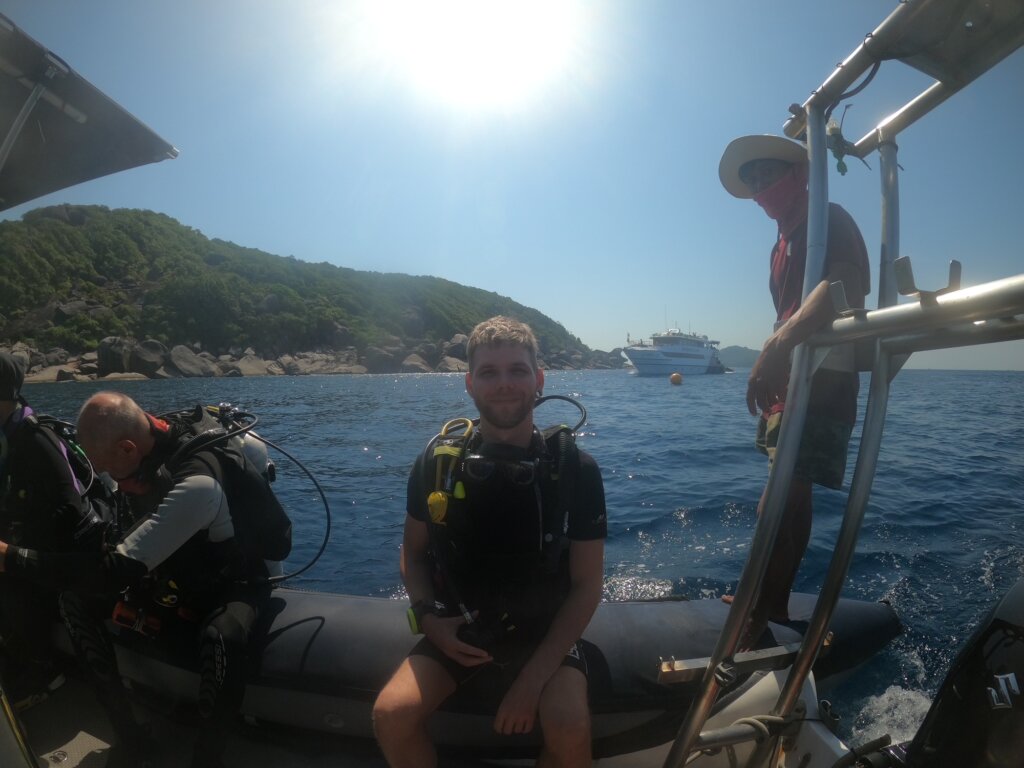
The purpose of the dingy was to bring us closer to the dive site entry. Our boat is too big to safely approach in most cases – so the routine I mentioned above is pretty much how all of our dives went. Once at the dive site, Pang would count us down, “three, two, one, GO!” and we would back-roll into the water, one hand holding our mask and regulator in place, the other on our weight belt and front straps of our BCD.
I had recently learned of a method to calm yourself before going on a dive. It advised to, when preparing to dive, envision what was about to happen. “I’ll feel excited and maybe my heart will be beating fast. First, I’ll roll into the water. Maybe it will be cold. It might take me a few seconds to catch my breath and calm myself. When the guide says so, we will begin to deflate our BCDs and descend into the water. I will go slow, I know sometimes I have trouble equalizing so the slower, the better.” I would tell myself these things prior to going in the water, which strangely helped to calm me before the dive.
And then our little group back-rolled into the water.
Our main objective of the dive (other than returning safely) was to dive to almost 30 meters, then look at a placard Pang had brought so we could see what colors fade away at depth. The deeper you submerge in water, the less vibrant colors are. And from ROYGBV, red is the first to go. It was very apparent as soon as she showed us the card.
The technical part of that dive was super brief and then we were able to enjoy everything else. The fish! The coral! The VISIBILITY! How incredible. If you’ve been following along for a while, you’ll know that visibility has been a constant battle with me and my time underwater. All I want is super clear water, people! And this liveaboard really provided that for me. YES!
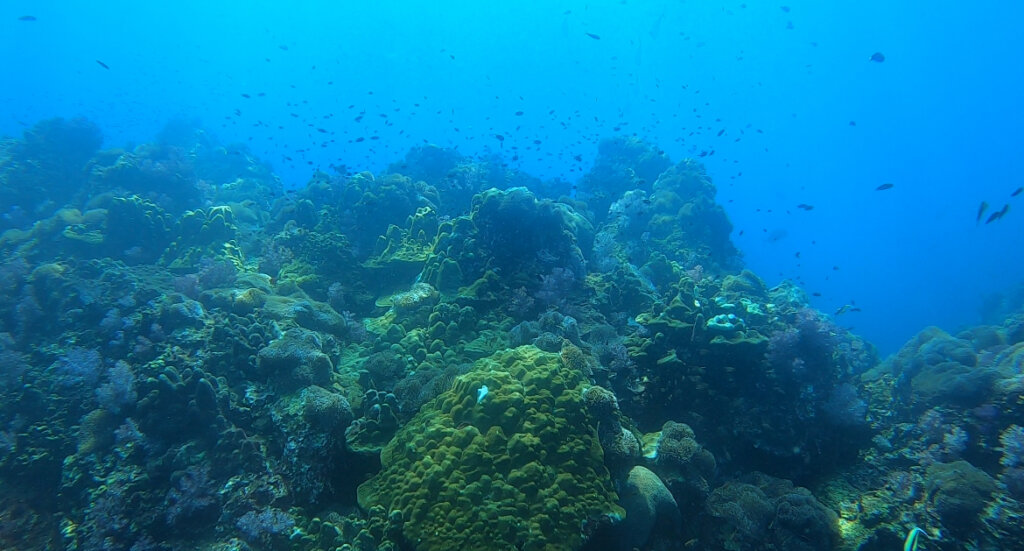
I came out of the water beaming. This is exactly what I’d always wanted diving to be. Plentiful marine life, clear warm water. I was happy.
On our first day, we had four dives. Three of the four were “skills” dives, counting towards our Advanced certification. Unfortunately, I wasn’t able to bring my GoPro with me until we had passed the certification, as per Thailand’s national park rules. Damn! But actually, it made me much more present during the dives anyway, just enjoying what I was seeing and working on the skills.
For our second and third dives, we dove at Batfish Rock, so named for the plentiful batfish that once inhabitated the dive site. While there were some, there weren’t as many as there used to be, apparently. Although, I saw a bunch of batfish throughout my time diving in the Andaman Sea, to be fair.
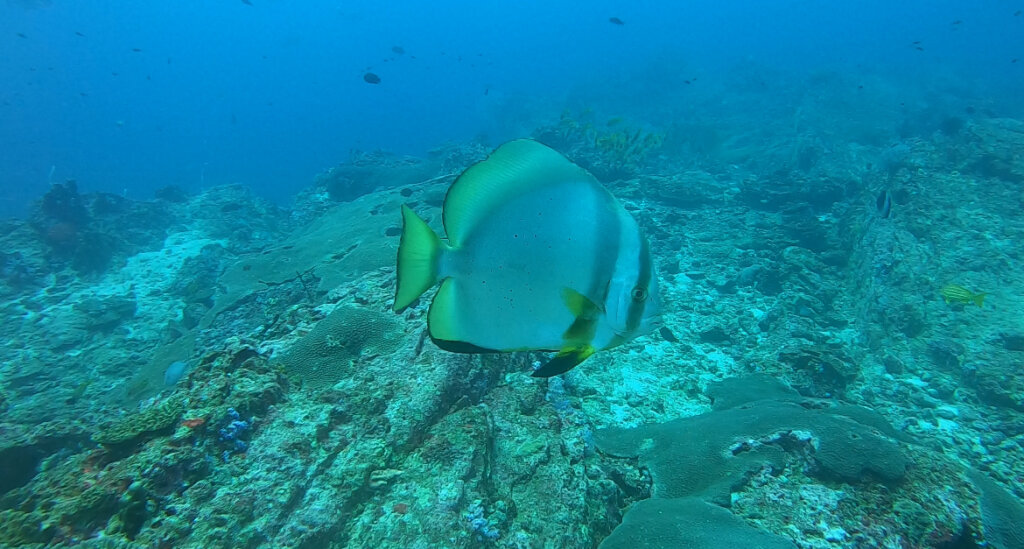
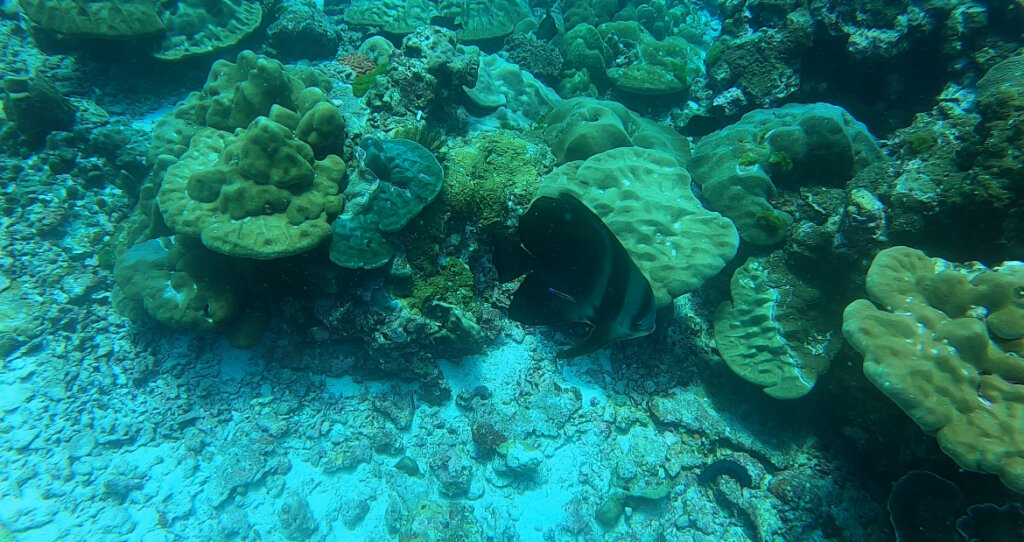
Aside from lots of different types of fish, the third dive gave us a sighting of a pretty large stingray, called a Jenkins stingray. That was exciting! I haven’t seen a stingray in quite some time – I don’t think I saw them during any of my snorkeling or diving sessions in Koh Lipe or even Koh Phi Phi. Which means the last time would have been Malaysia.
Another big mention about Batfish Rock was that it counted towards our Drift Dive skill. I don’t have much experience with currents or drifts at all. A slight drift during one of the Koh Phi Phi dives and a stronger one in Moalboal, but that’s about it. But this was a LOT more drift. As we were descending down the mooring line, our bodies were blowing like a flag in the wind, with the current rushing past us. And where was Sonne?! I couldn’t see her. It took maybe three minutes but finally she made it to the mooring line and our group safely descended. Chaos! But it was fun. We made our way from the strong current. Later in the dive, we were gliding through the water on a much calmer current. Finally, I was experiencing a proper drift dive and really enjoying it.
After every dive, we were given time to rinse off (with warm water, a luxury!), sunbathe for a bit, and then, ALWAYS, eat. We were provided with family style meals all the time. Breakfast, lunch, afternoon snack, and dinner. YUM! So that was always the drill. Then everyone would tuck off and do whatever – maybe have a nap, lay in the sun or the shade, read, etc. Diving, actually, is exhausting. So most of the time, in between dives, not much was happening whatsoever.
Our final dive of the day was a night dive. I haven’t done a night dive since Malaysia. And, like Malaysia, we were able to spot a cuttlefish! It was pretty far down and we had already started to ascend so I couldn’t get a good glimpse. However, a Frenchie named Alexis was near it and got a cool video. Alexis had a nice camera so oftentimes, a group of us would all crowd around him as he went through photos/videos on his laptop after dives. I was especially interested in his nudibranch photographs. My GoPro is good for action/movement, it is really bad at filming/photographing the small stuff like nudibranchs. It was awesome to see the detail of those beautiful creatures – and Thailand has tons of them!
The night dive was alright, but nothing too special. As one might expect, most of the fish are “sleeping” and hidden during the night, since this is when predators are most active. Octopi, cuttlefish, sharks, etcs. Although, aside from a cuttlefish, we didn’t see any of those guys. Damn! That’s alright. HOWEVER – at one point, Pang told us to turn off our torches… and as we waved our hands around, we were able to see bioluminescent plankton around us! Fun!
Early on, I had talked with my guide Pang because I was a little frustrated with the air consumption of Sonne & Wulter. It was mostly fine, but sometimes we would have to end a dive far earlier than I needed to. At times, I had almost double the amount of air left. Pang was understanding and after talking with the crew, they decided that, when possible, Pang would pass me over to another dive crew if they were near. On subsequent dives, we were able to make this happen which was much appreciated. I got to spend time with my group but then could continue along if I had more air than them. Yay!
Advanced Open Water
On the second day, we had three dives ahead of us. By the end of the day, we should in theory have our advanced certification. Eek!
We got to sleep in a little extra, with a wake-up time of 7.20am. Yahoo!
Already, we’d done three of our skills – deep diving, drift diving, and night diving. Now, we still had underwater navigation and fish identification.
Our first dive of the day was at South East Rock. This was a great dive. I saw four moray eels, which was a record during a single dive for me. But not only that, we were faced with thermocline – which was an experience in and of itself. Thermocline is basically what happens when a current of cold water blows in to meet the warmer water. Google describe it as such: a distinct, thin layer in large bodies of water where temperature changes rapidly with depth, separating warm, mixed surface water from cold, dense deep water. “You’ll be able to see it – it’s like everything goes blurry.” I didn’t understand what that meant when it was vocalized, but when I saw it in person, I understood completely. Truly, it was like we were swimming into a wall of blur. Everything just goes kinda pixelated. And the water gets COLD. Very cold. Goosebumps and shivering cold.
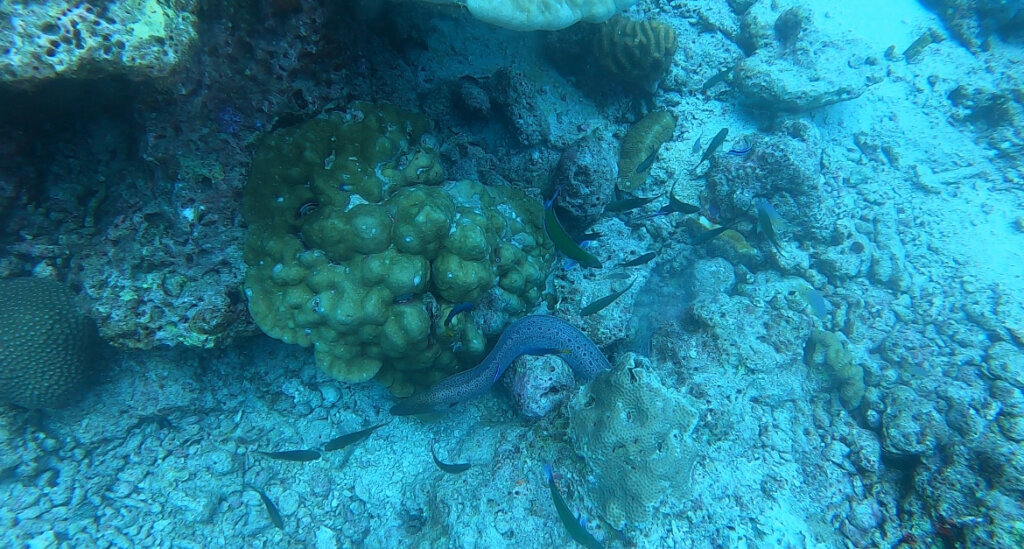
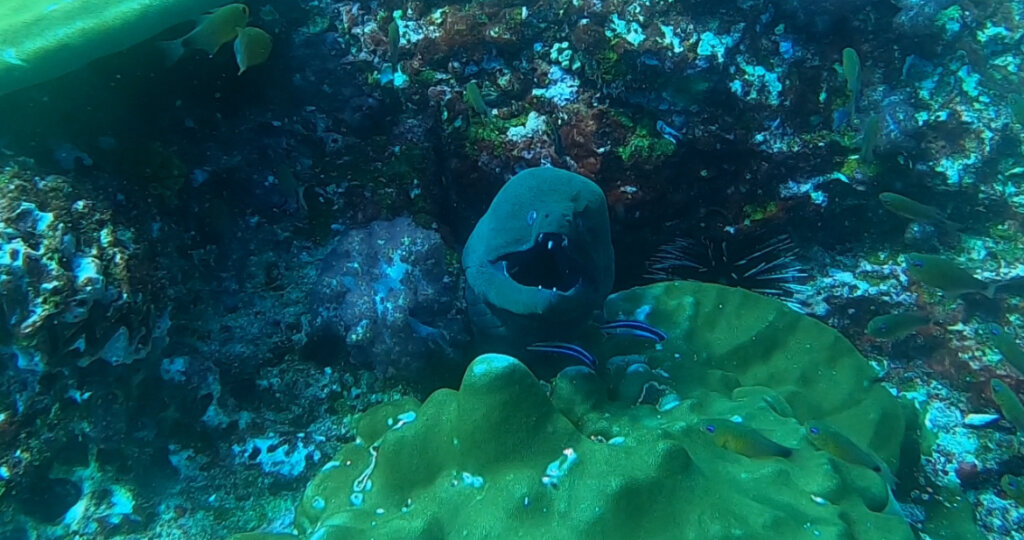
But, we survived. Pang was able to spot a white tip reef shark resting under some coral. And during the same dive, we briefly saw a black tip reef shark swimming off in the distance. Cool!!! Those were the only sharks I saw during the seven day trip. Bummer! I wish I’d been able to see more (and with my GoPro) but alas. We also saw a stingray and… a teeny, tiny seahorse! Seahorses are a total treat for me because I have only seen them once before going on the liveaboard.
Next, we went to Ray City, where we did our underwater navigation. Pang pulled out the compasses and, before our briefing, practiced on land. While I’d learned how to use the underwater compasses before during my Open Water training, it had been a lonnnng time and to be honest, I’d forgotten how to use them. Note, this is a little different from a land compass. After Pang taught us a little longer than should have been necessary (because we were confused), we finally were ready to put our skill into action.
“Three, two, one, GO!” and we were in the water again. Pang had each of us practice our skills individually, while the others waited patiently, observing the surrounding marine life. I went first. Using my compass, I navigated forward seven paces, then 90 degrees to the right, swimming seven paces, 90 degrees to the right again, and to the right again. Pang had written notes for the degrees I had set on my compass each time and in the end, I finished right where I started. Success! Sonne and Wulter passed as well. Yahoo!
We then continued the dive, enjoying the fish and coral. But what made Ray City so exciting was… well, the amount of stingrays! Never in my life have I seen so many stingrays on one dive. I stopped counting after 10. There was one section where five blue-spotted stingrays were all laying next to/on top of one another. I wish I’d been able to use my GoPro but my privileges weren’t restored yet, damn it! Instead, I’ll enjoy the memory in my mind.
With our last dive of the day, at Pineapple Bay, I was – surprisingly – able to have my GoPro privileges restored. A little too late! No sharks and no stingrays to film! Hahaha. No, but I was surprised because I thought I had to wait until the fifth skill was done. I was able to bring it along for the “fish identification” skill, because hopefully it would help us to identify some fish with photographic proof! Pineapple Bay was nice, but the other dives of the day were much more exciting, what with sharks, stingrays, thermocline, and more. But at the end of it… we were certified!
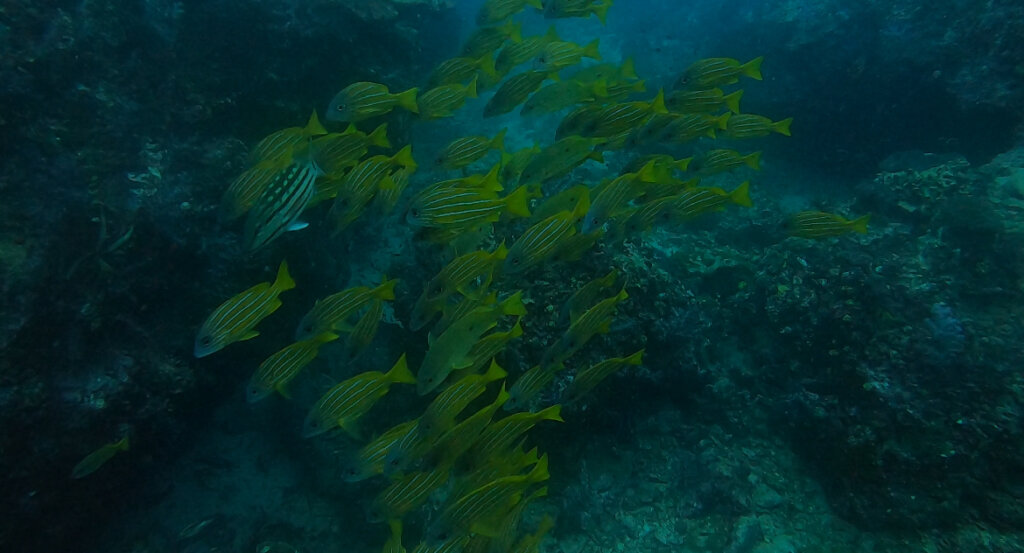
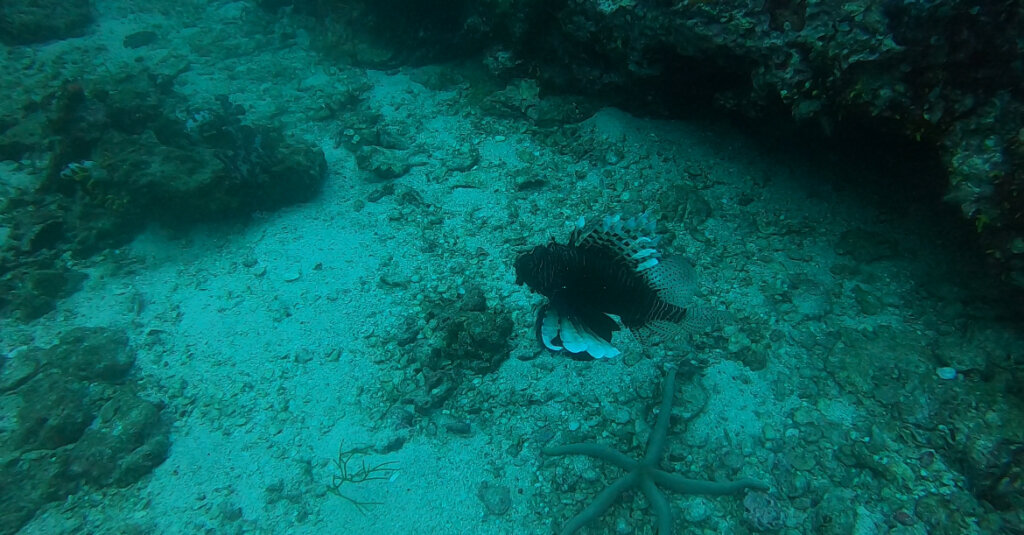
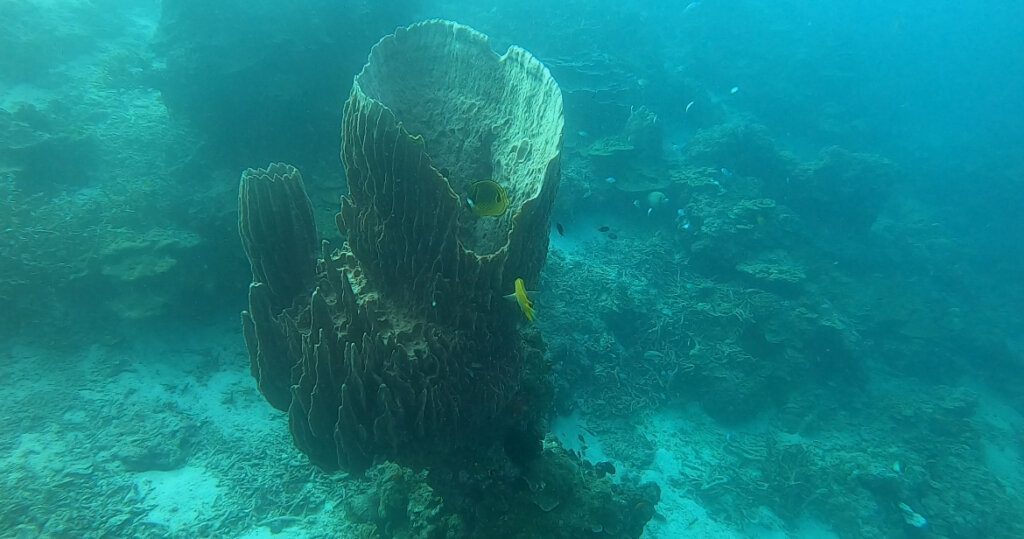
Once upon a time, I thought there was no need to get my Advanced. I was offered the opportunity during my initial liveaboard in Australia but in the end, it was more expensive and I didn’t know whether or not I’d be diving much more in the future. Well, 30+ dives later, I finally got it! Exciting!
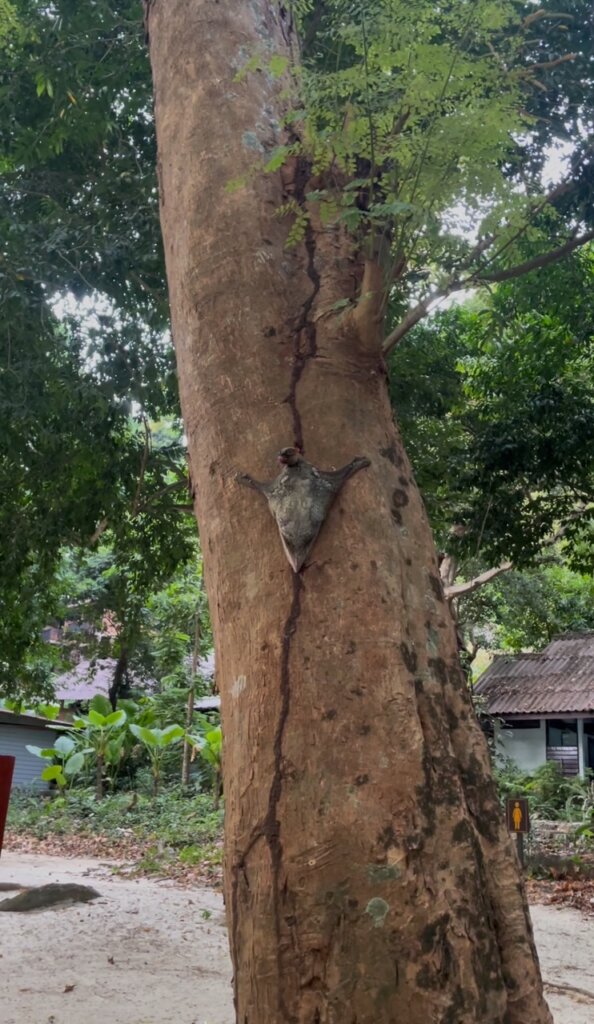
After our third dive, we dried off and were brought to land for the first time in almost 48 hours. We were given an hour to enjoy the beach or look for the flying lemurs that hung out at Surin Island National Park. Pang and another guide, Enya, chaperoned our group to the beach. They peered into the trees and within moments, pointed to the flying lemur… s… Flying leMURS? Plural?? I’ve seen flying lemurs before, always at night, but always solitary and never very active. But in this tree there were two and off in another tree was a third. WHAT? Oh, how I wish I’d brought my nice camera with me! I kept it in storage at the dive center, thinking I wouldn’t have much use for it.
Our group watched the lemurs for some time but they weren’t doing much. I ended up walking to the beach and sitting on a boulder, watching the water slowly lap up onto the shore. It was relaxing. But then, the lemurs seemed to be calling to me. I got up and wandered back over to them. Later, Karli mentioned she felt the same – that she “had a feeling” to go back there.
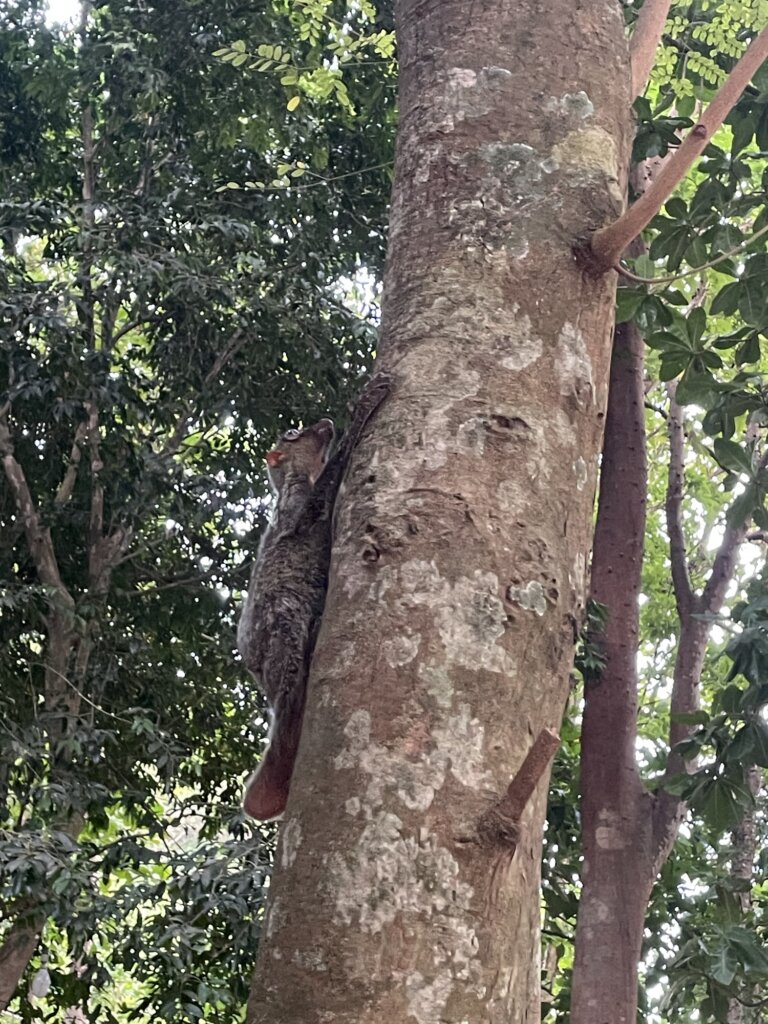
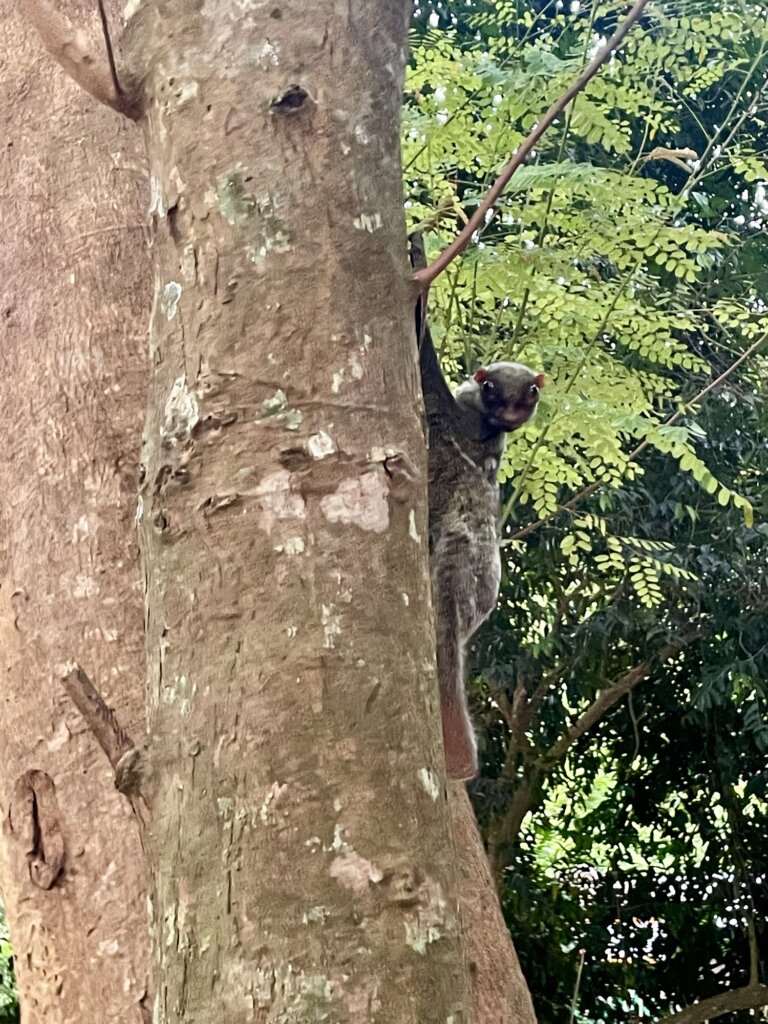
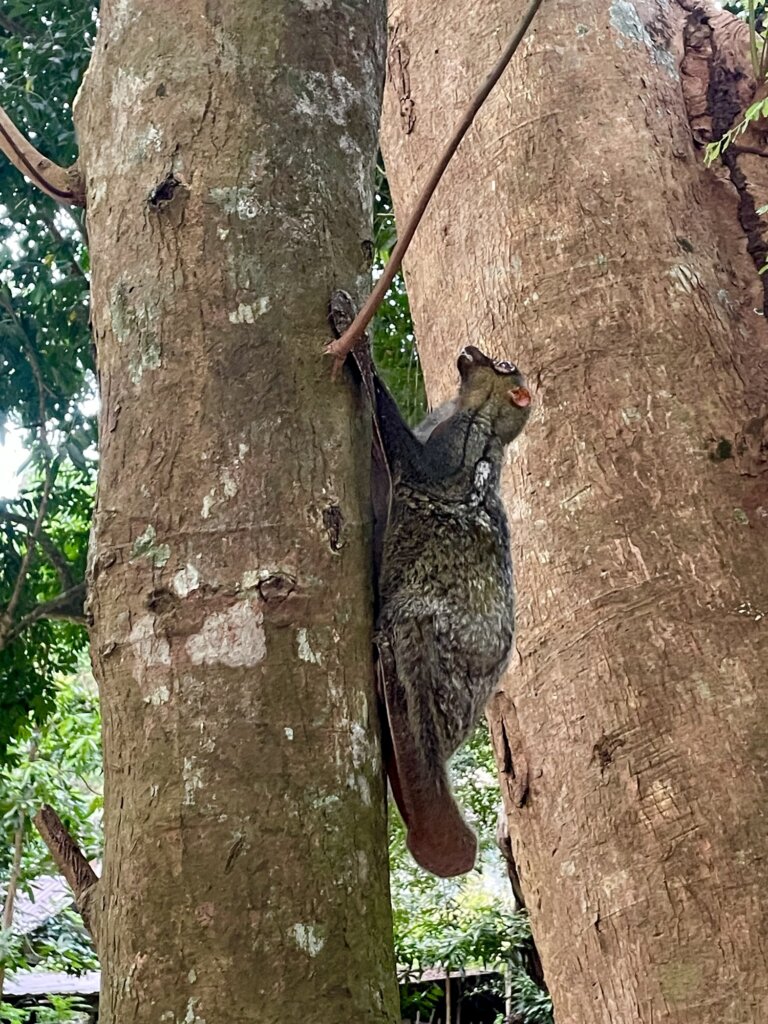
A few of us met up at the trees again and noticed that now one tree had three lemurs and another had two. Altogether, I think there were seven lemurs up in the trees. To be clear, flying lemurs neither fly (they glide) nor are actually lemurs. Confusing.
We mused about how we wanted them to glide, to do something. Earlier, Pang had told us that more often than not, they’re not really doing much. Because they’re nocturnal, they’re obviously more active at night.
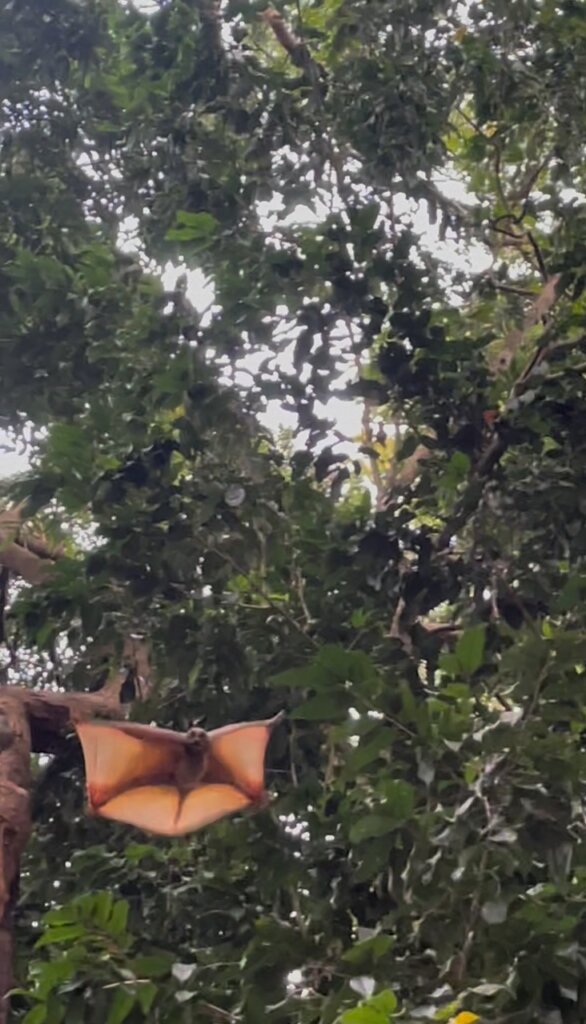
“Wouldn’t it be cool if one of them just flew from one tree to the other?” somebody said. We were all thinking it. And then, as if summoned, one of them started stirring. First, it peed, and then it started hopping higher up along the tree. After so much dormancy, I had a feeling something cool was going to happen. I started filming.
A few minutes later, the flying lemur was scoping out another tree. And then, without warning, it jumped from the tree and spread its arms, its webbing catching the air as it glided onto the tree directly behind me. I managed to capture it on film. As it was happening, Annie, a Canadian girl whom I later would talk to a lot, shouted, “No way! We DID IT! WE SAW IT!” Her excitement was infectious. Later that night, I rewatched the video probably ten times before going to bed, laughing at her narration every time.
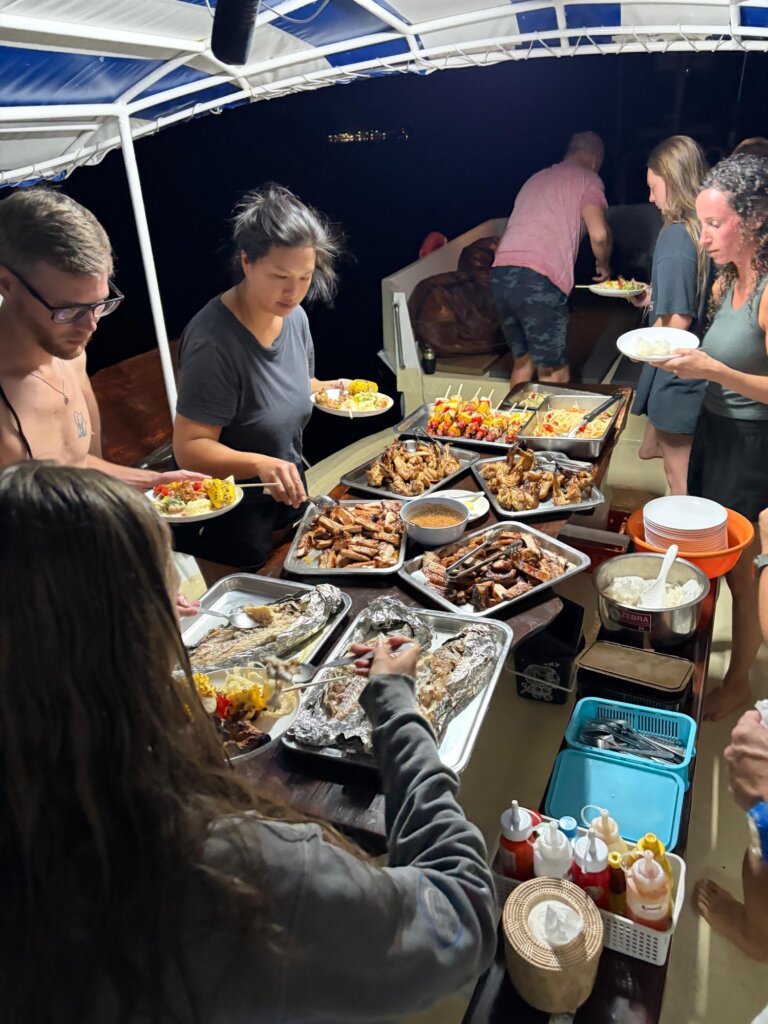
Every trip with Sea Dragon has a BBQ and so after our beach day, we were met with BBQ chicken, pork belly, skewered veggies, corn, and… to my absolute delight: MASHED POTATOES. Oh, how I love and miss mashed potatoes all the time. What a wonderful treat it was!
The sun had already set by this point. I read and finished a book and then tried to get to bed early. Tomorrow would be the end of the three day trip, which meant only two dives and a transition of people.
The Transition
With my GoPro privileges restored and one of the best dive sites in the world ahead of me… I was ready to go. It was the last day of the first part of the trip – Sonne, Wulter, and a few others would be disembarking from the ship that afternoon and we would be greeting a whole new group of people. But first…
Richelieu Rock.
We woke up at 6.20am, had our dive briefing, and then, for the first time this trip, our group was the first in the water.
Richelieu Rock is a pinnacle in the middle of the ocean. There’s no land nearby, it’s just one towering rock in the water – an oasis in the sea.
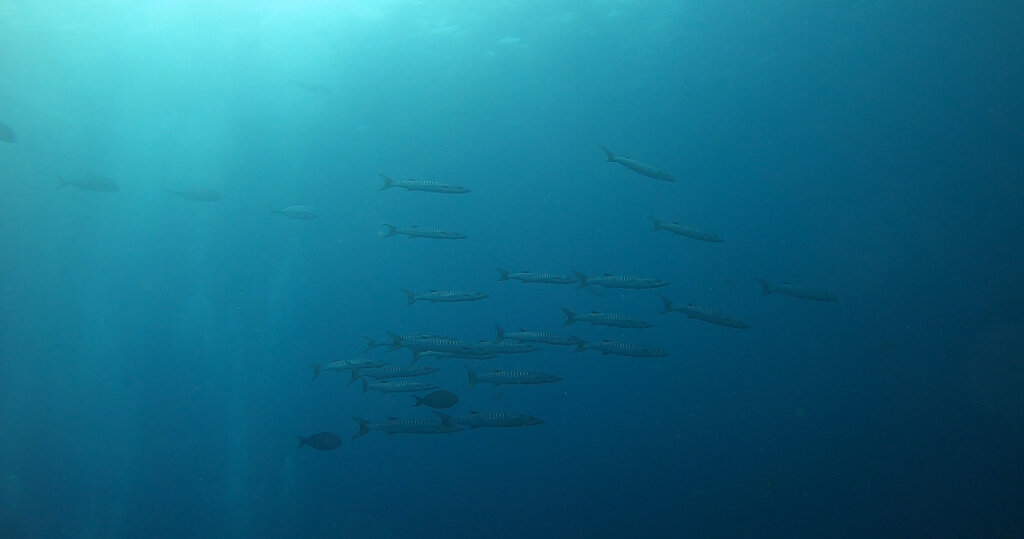
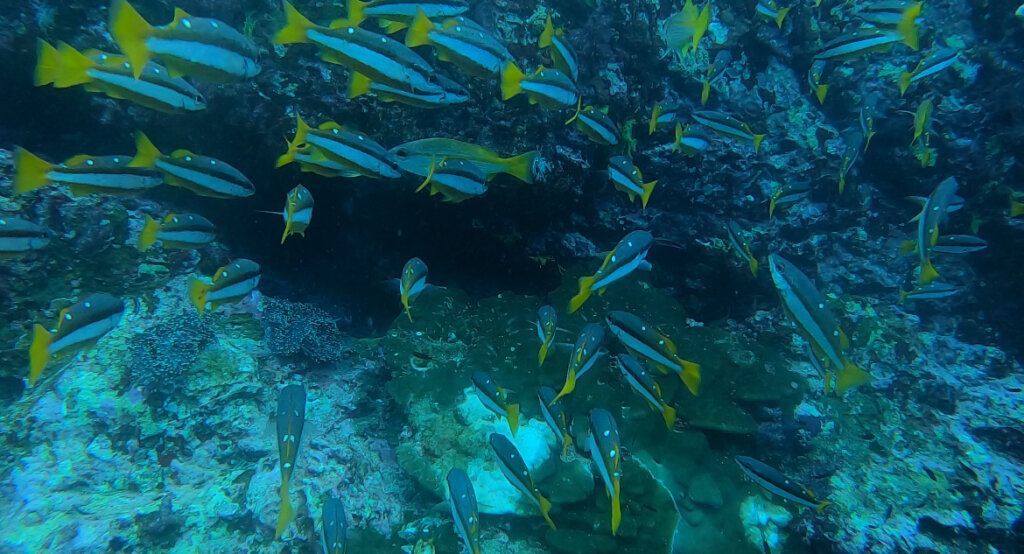
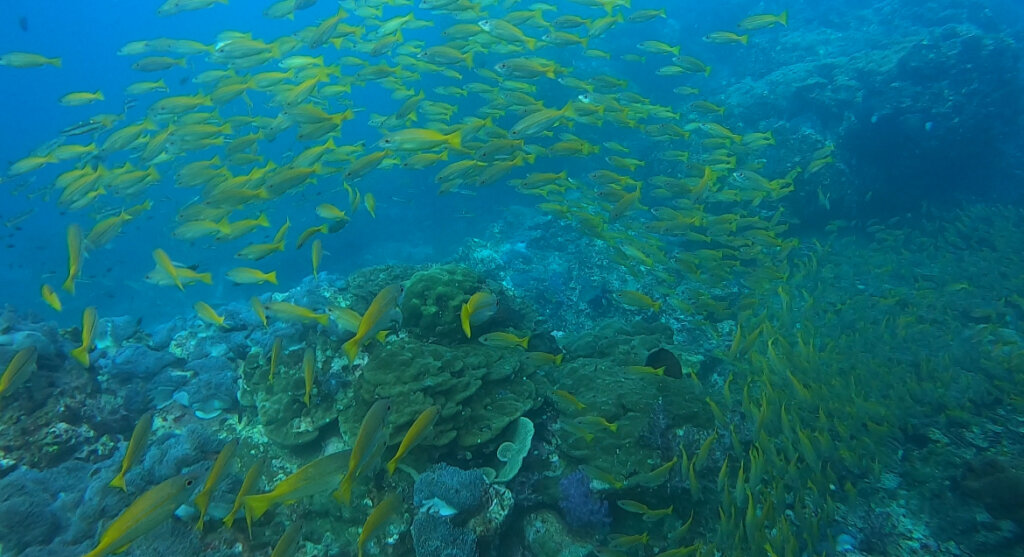
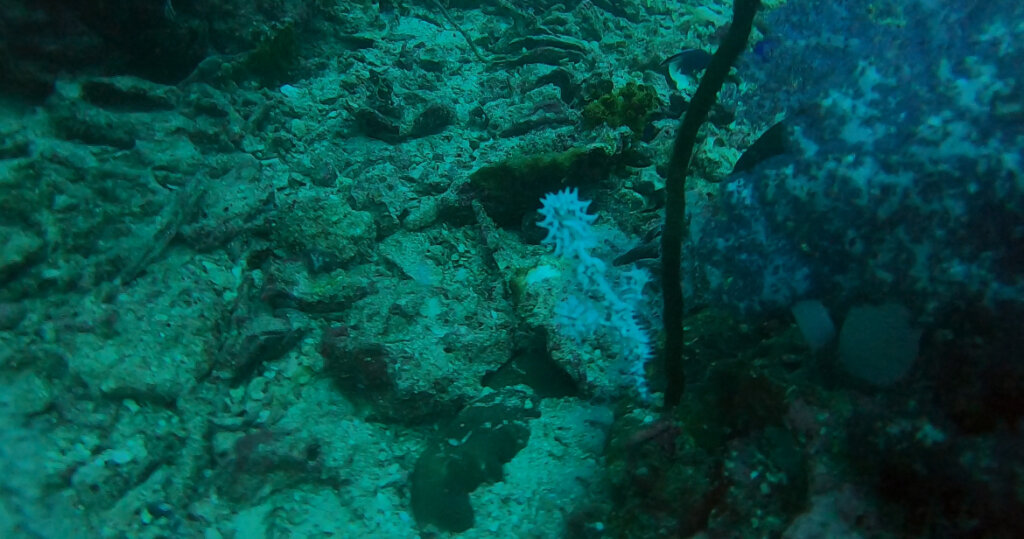
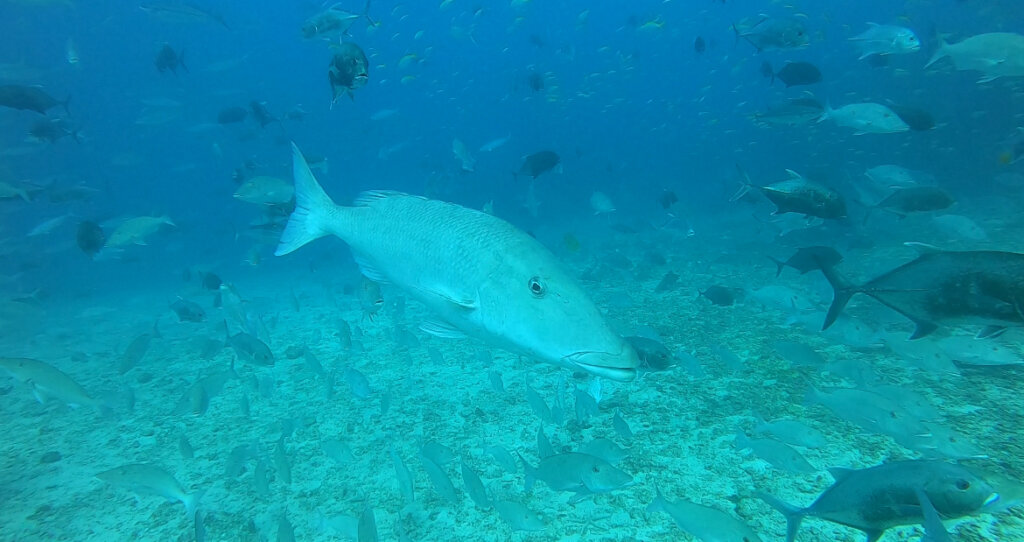
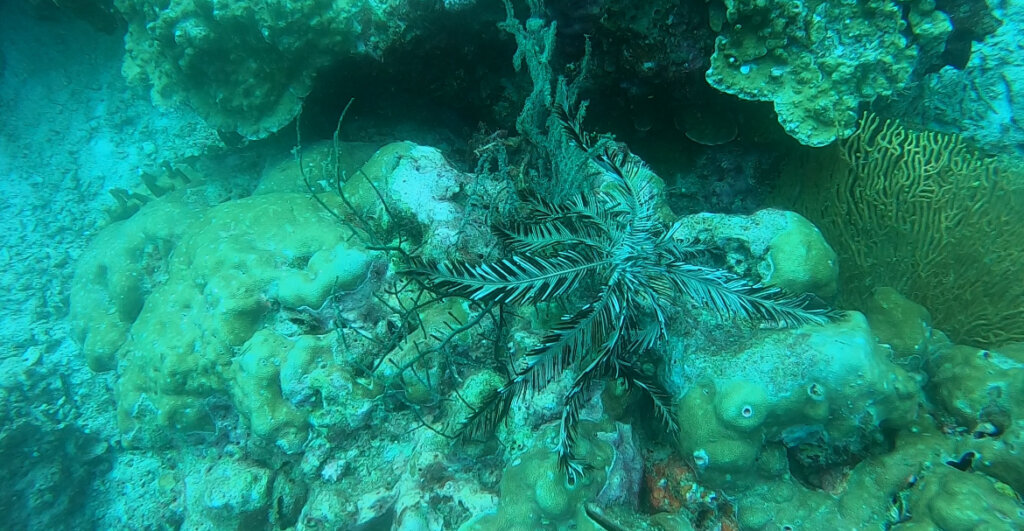
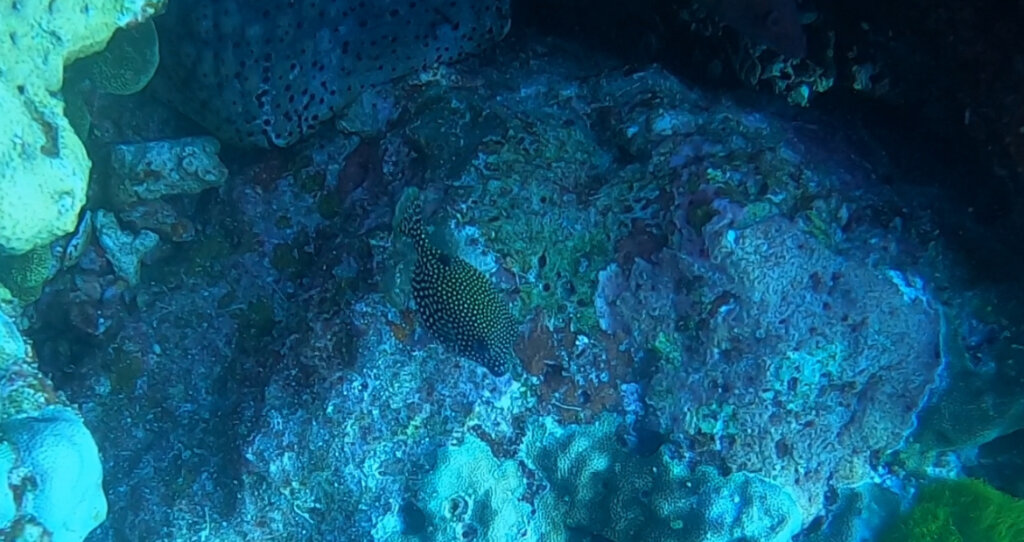
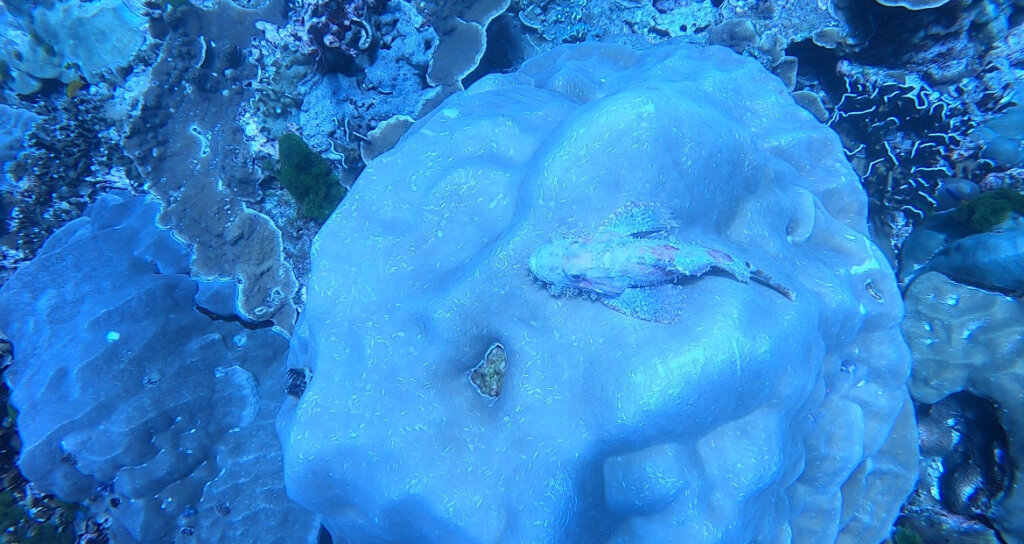
Immediately upon entry, I was amazed by the large schools of fish. That is what Richelieu is famous for – schools of barracuda, tuna, trevally, and more. Never before have I had such massive schools of fish passing me by, passing through me, etc. It was amazing. Pang spotted two ghost pipefish for us – a rare, elusive pipefish. Pipefish are related to seahorses so they have similar looks typically, but ghost pipefish are in a league of their own, adorned in an unusual spiky look. They’re very cool! (Seen in middle photo below.)
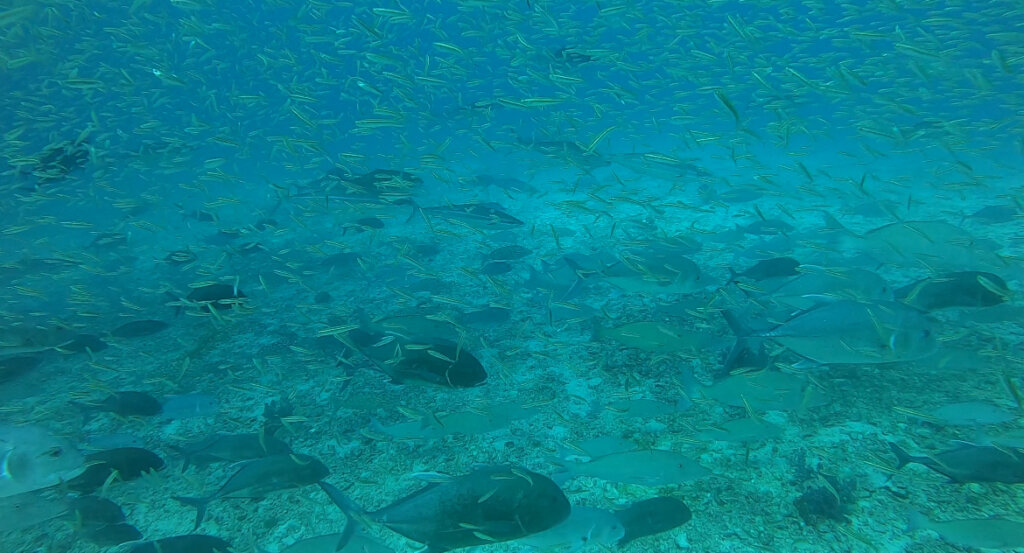
We had two dives at Richelieu Rock.
As became the custom, Pang led the group, followed by Sonne, Wulter, and lastly – me.
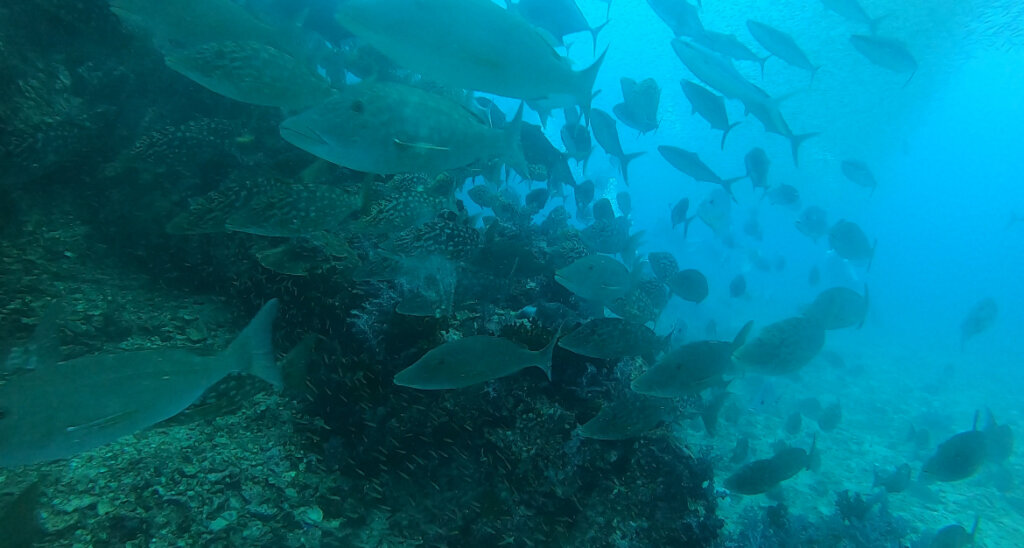
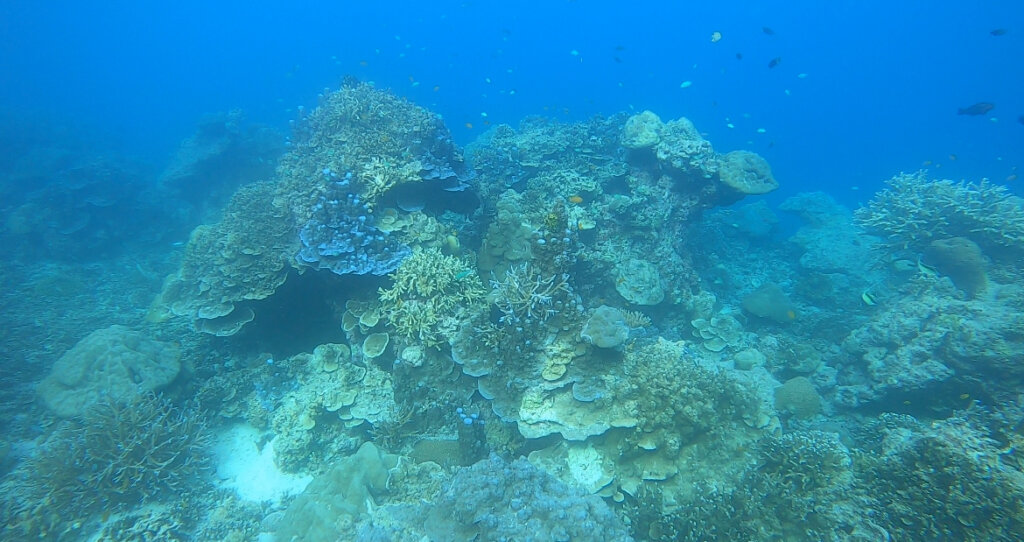
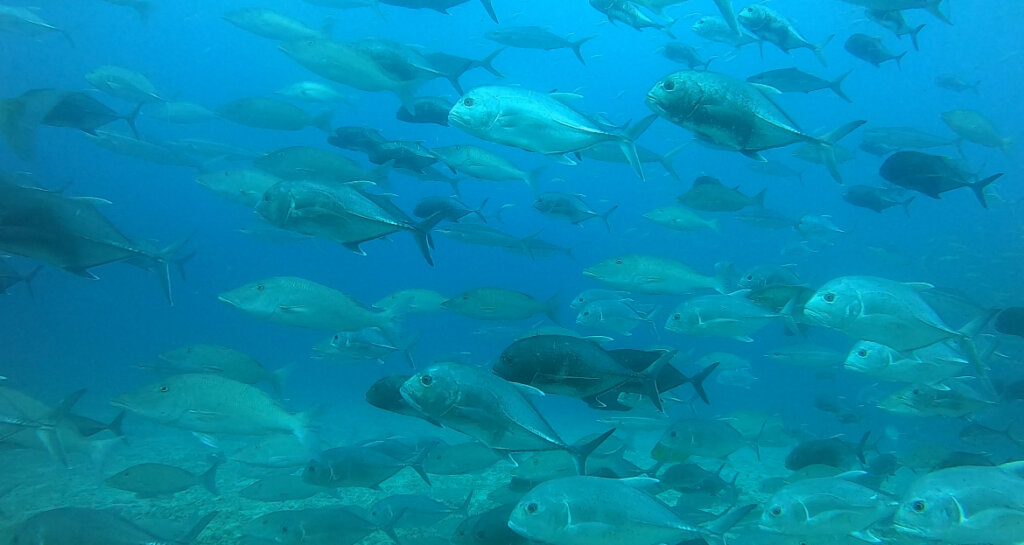
Richelieu is quite busy. Because of its world-class status, there are a lot of divers there, even at 7am. We’ve been fortunate enough to have most dive sites to ourself thus far but not at this site. At times, there seem to be more schools of divers than fish!
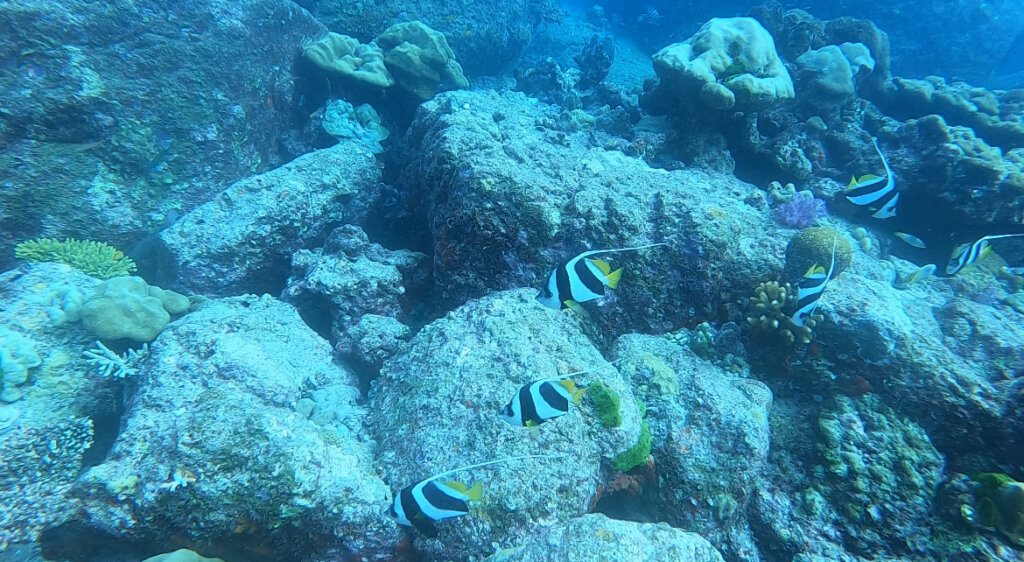
On the second dive, I was graced with one of my favorite sightings during the whole week-long liveaboard. Pang, Sonne, and Wulter had missed part of it. We had entered a chunk of space where no other divers were, and I spotted it. An octopus, feeling around near a rock wall. I tried to call to Wulter, the closest to me, but he didn’t hear me. Protocol is that if you lose a diver, you look around for one minute, and then return to the surface to reunite.
I watched the octopus as it moved across the ground, changing color and texture a few times. It investigated a cave, then moved away from it and started to float away – one of my favorite behaviors of theirs.
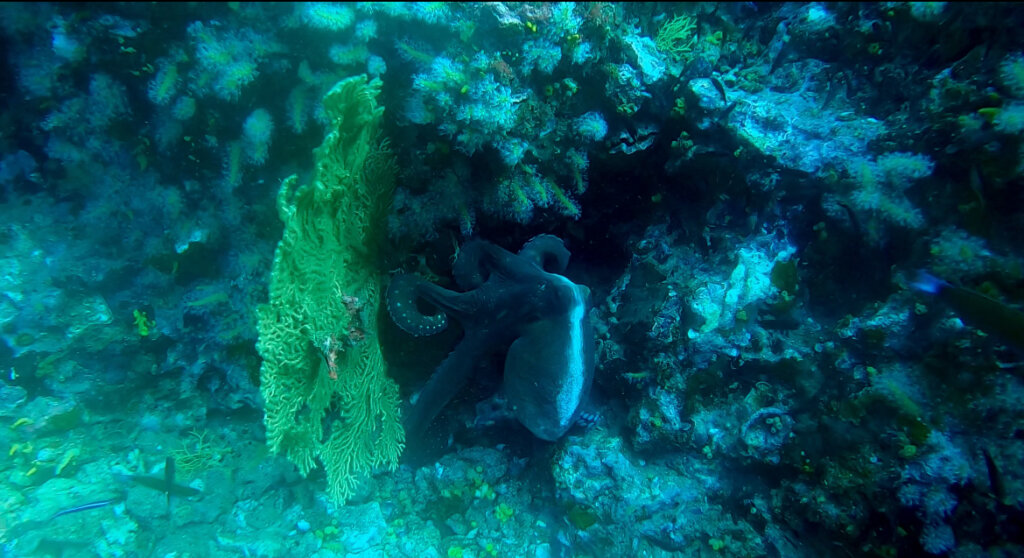
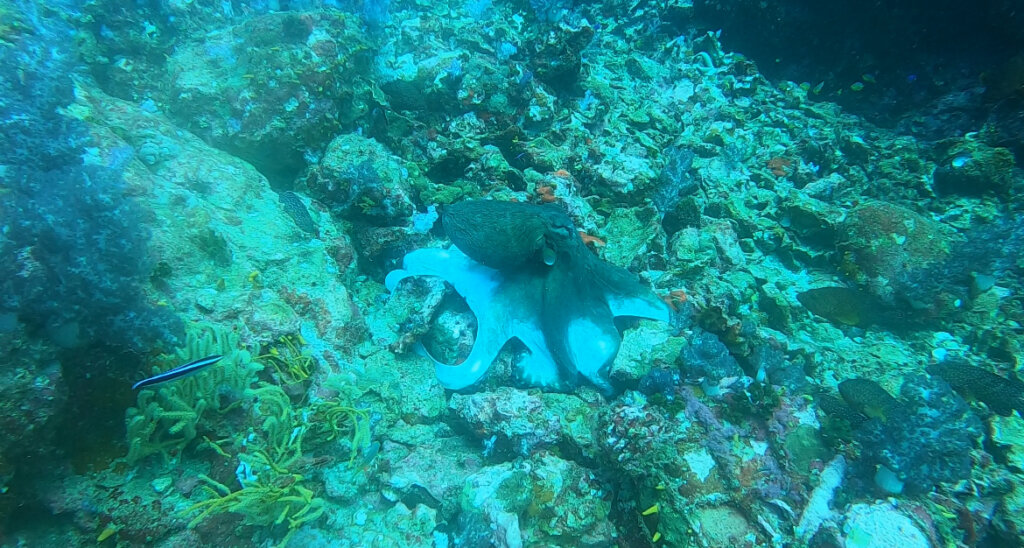
I have been fortunate enough to spend a fair amount of time with octopuses. During my time in Coral Bay, Australia, I had stumbled upon an octopus’ lair. During my two weeks, I regularly visited the spot and was able to witness some truly unforgettable octopus moments. This sighting, albeit brief, was my best diving experience with an octopus.
While watching the octopus for about a minute, I kept looking over to see if my group had looked back for me or not. Just as another dive group signaled to see where my buddy was, Wulter, Sonne, and Pang came swimming over in time to enjoy the octopus with me. Phew! (Btw, I was JUST about to leave the octopus and reunite with my group. Not much time had passed at all. I wanted a few moments to enjoy the sighting before swimming back towards the group is all.)
On another dive, I would see the octopus again – but this time, sitting still, camouflaged like the coral it rested atop, unmoving. Divers circled around it, waving their GoPros in its face – some of them getting much too close. The octopus remained unbothered, turned to stone like a victim of Medusa. I felt very lucky that I got to observe the behavior I had, on my own.
It was the perfect way to finish the three day trip. Wulter mentioned how it was the one “mental checklist” creature he was hoping to see, and he got to!
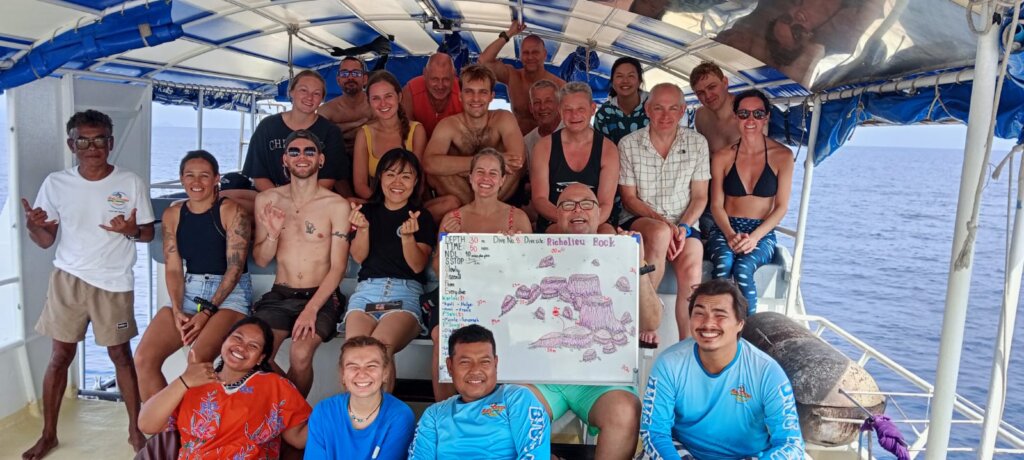
With the dive finished, the boat headed back to the pier, where people exchanged their goodbyes. I said farewell to Karli, Sonne, Wulter, Moonjyeung, and a couple others. Unfortunately, I had to say goodbye to the legend that is Pang as well – she had to return to the dive center to teach some people in the classroom. I was sad to be losing her as a guide. She was really excellent! (And, bonus, she would sometimes say “ums” instead of “um,” which I thought was an adorable quirk.)
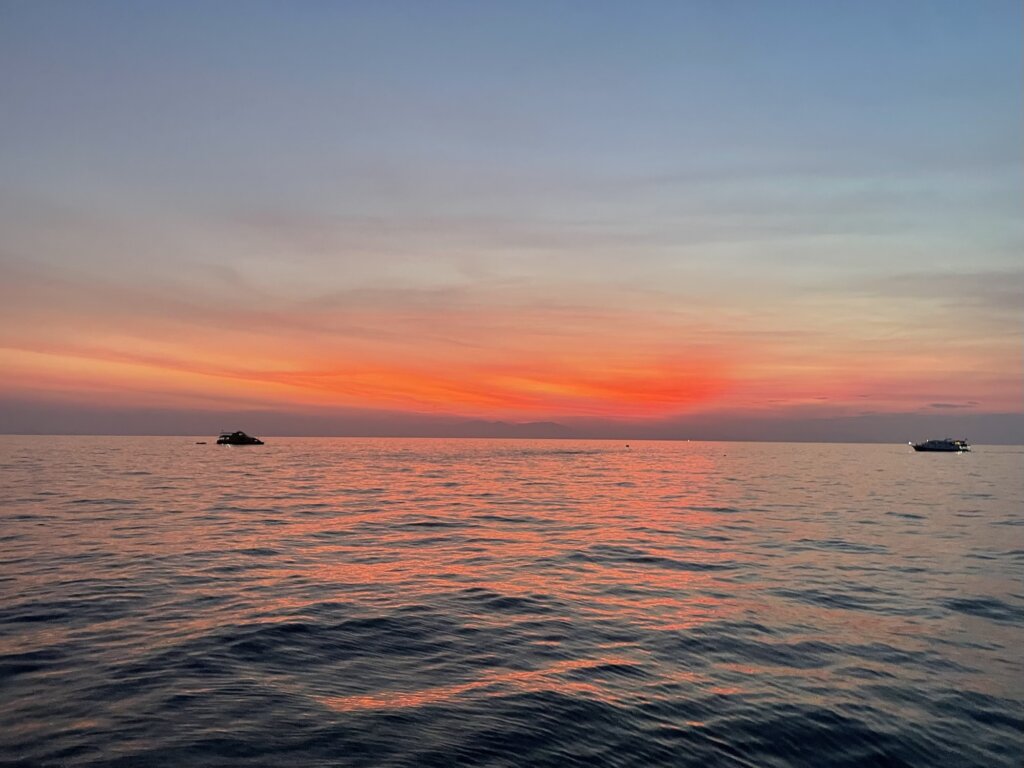
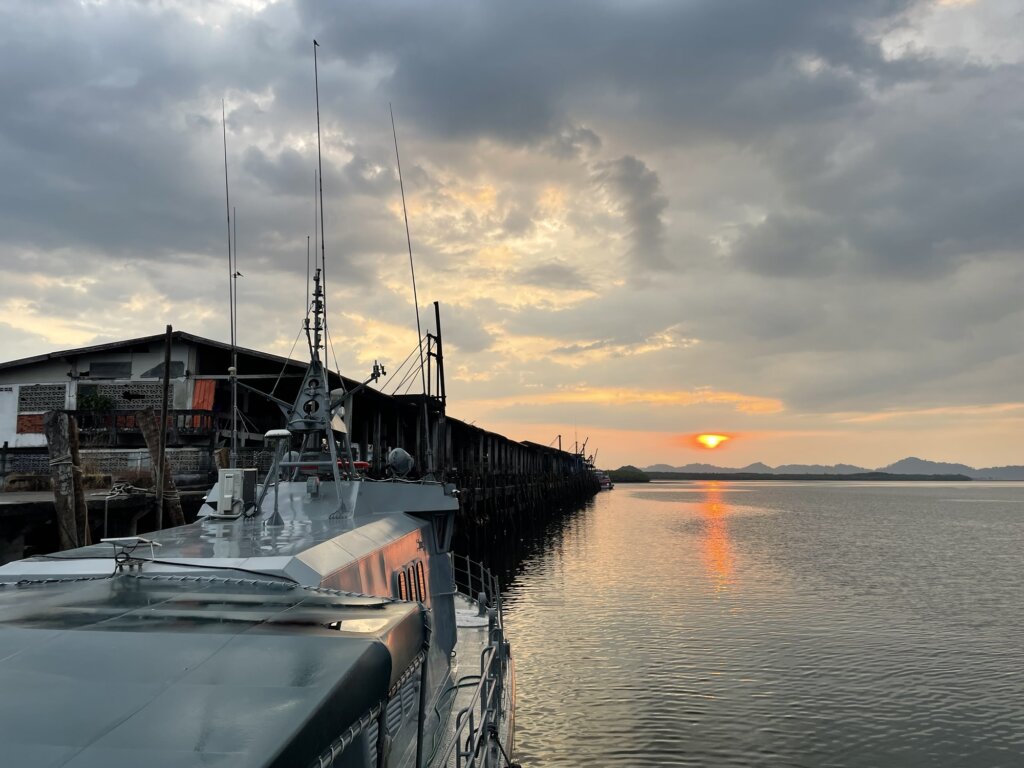
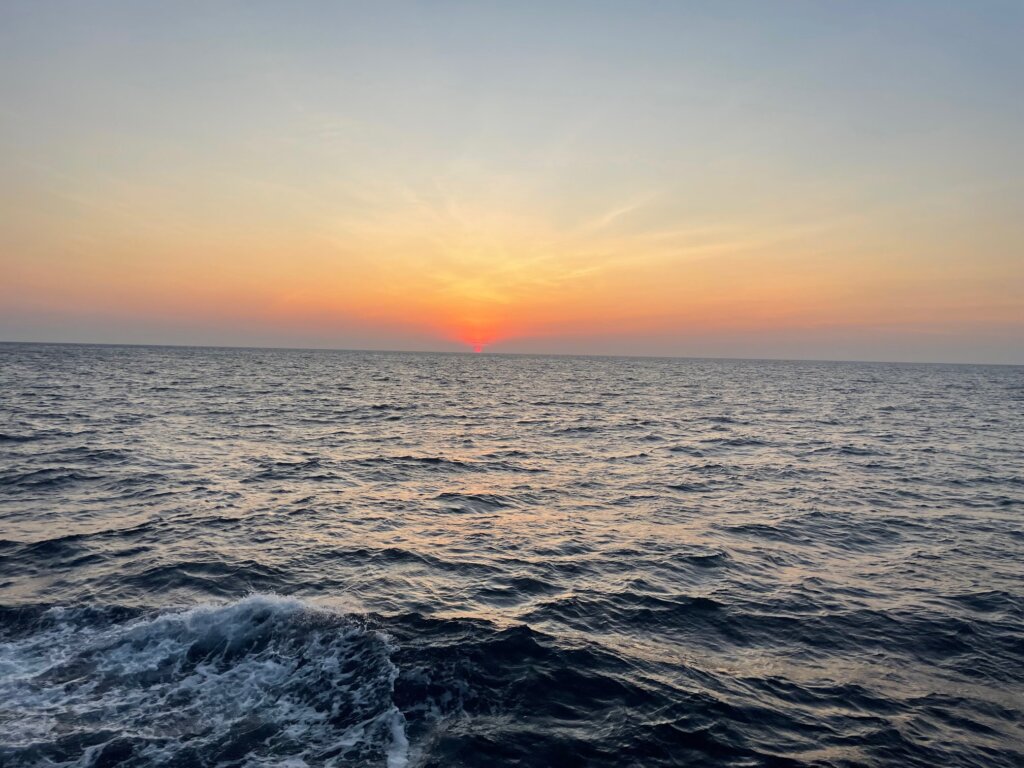
Those of us remaining had a lazy afternoon, waiting a few hours for the next group to arrive. At one point, Annie, Alexis, Hulger, and I played card games to pass the time. It started to rain lightly. And, in the evening, we watched the sun set.
The Second Leg of the Trip
Eventually, the other group joined us. My new guide was Hugo and the members of my dive group were Athan, Dolton, and Akash. Athan and Dolton had about 8 dives each, where Akash had around 40 – like me. While we all caught up, I learned that the three of them all were using 15L tanks, which meant they would, in theory, take longer to consume their air than me. I voiced the concern that maybe I would run out of air too quickly, but they all shut me down, saying no, that they have pretty bad air consumption. Ruh-roh. Would this be a repeat of my first group?
Because the liveaboard was so expensive (I’m saying about USD$1300 between the liveaboard itself, dive insurance, and national park fees), I really, really wanted to make the most of my dives and not have them be cut short because of others’ poor air consumption. I made a mental note that if the next day, it wasn’t seeming like a good match, I’d talk with Hugo or the supervisor to try and sort out an alternative.
We had four dives ahead of us the next morning, with the first being at Black Tip Rocks. That sounded promising – would we be seeing some black tip reef sharks?
No.
It was a good dive but, unfortunately, cut short. It was seeming the air consumption was not going to be a match. How could all three of them have 15L tanks and yet I was coming up with so much more air at the end of the dive?!
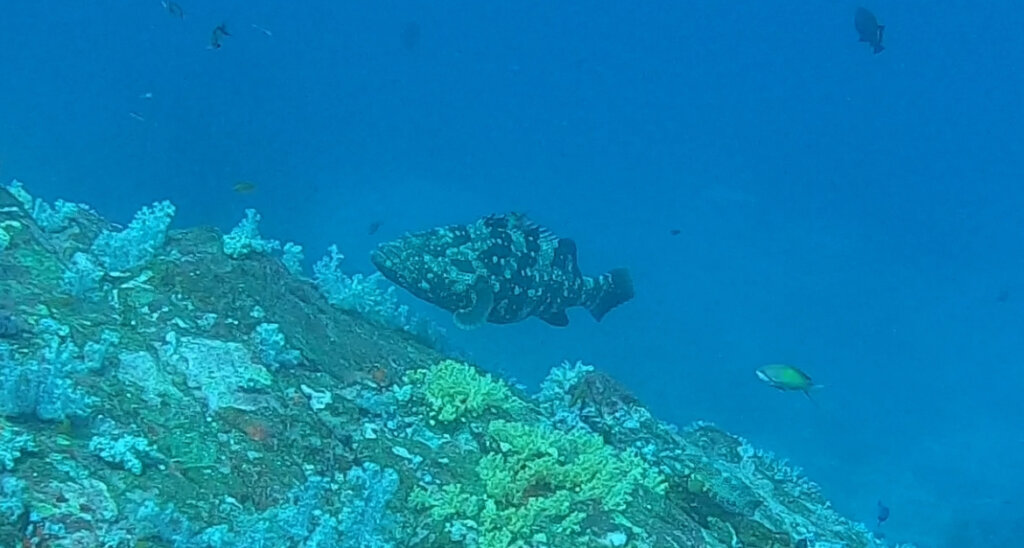
Our next dive was a return to South East Rock, where, off in the distance, I spotted a massive napoleon wrasse. It was so big! I wish I’d gotten video of it but it was too far away to get good video. Instead, I enjoyed it from a distance. What a massive fish, though. I haven’t mentioned yet but I’ve also seem some totally massive groupers. I can only imagine what a school of those guys would look like – although, I think they’re predominantly solitary.
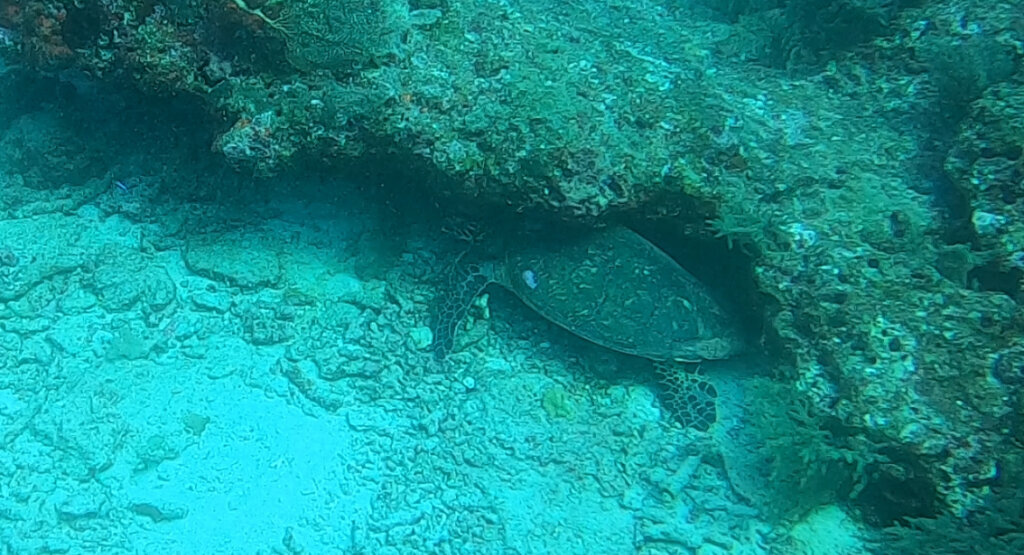
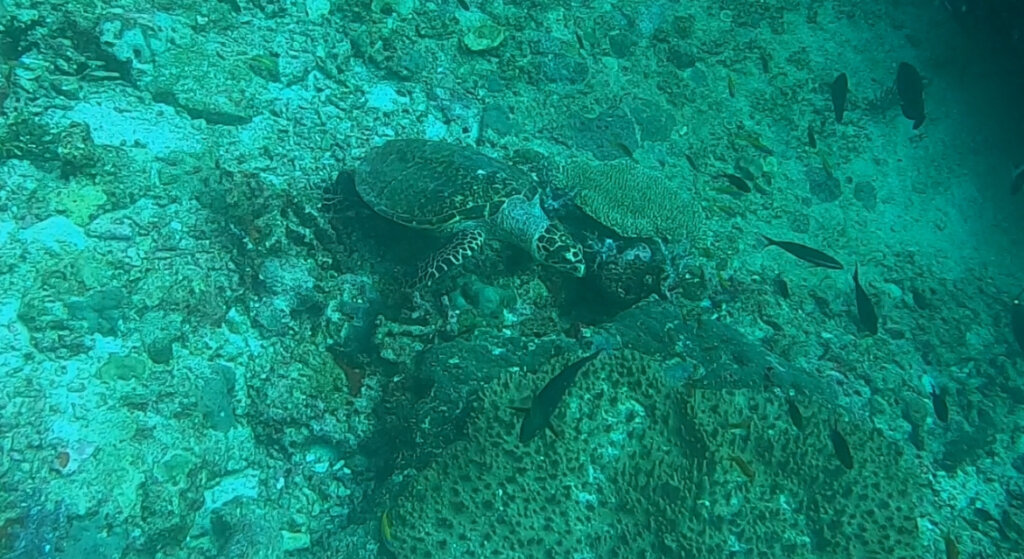
Next was Turtle Ledge – and I think we did actually see a turtle there!
In the evening, we had a night dive.
It was a fine day but between cutting the dives short and having dove at the incredible Richelieu Rock the day before, I was feeling a little underwhelmed.
After dinner, I talked with Annie to see what she thought about the group air consumption issue. Was I being a brat? Was it something worth bringing up? Annie had much more experience than me – around 430 dives – so I wanted to know what protocol was. She sympathized and said that I should definitely bring it up if I wasn’t happy about it. “Especially with Richelieu Rock – you don’t want to have to go up after 30min,” she said. While we’d visited Richelieu on the first leg of our trip, we were also visiting twice more the following day.
I intended to talk to Hugo to try and find a solution to the air consumption problem. Unfortunately, he was surrounded my the others in my dive group – and he was the center of attention. Maurice, the supervisor, was tucked off to the side so I approached him instead. He listened to my concerns, asked a few clarification questions, and then mentioned he would chat with the team and get back to me. He was on it right away and had a solution.
And that solution… was to join Annie’s group. Oh, NO! I was looking for a Goldilocks solution. To join a group of not beginner-beginners, but not people with 430 dives, damn it!!! Now instead of having other people spoiling my dive, I was going to be spoiling everyone elses’! How could I possibly keep up with such advanced divers?
A New Dive Group
In the morning, I was joined with Karlos as my new guide and Annie, Frank, and Hulger as the other members of the group. I have to admit, I was anxious about it. Would I be able to “hang”? I really didn’t want to spoil their dives. As Maurice and I discussed earlier, we would see how it went and if I needed to switch again, no problem.
Of course, for the first time since diving on the liveaboard, I had trouble equalizing that first dive. I felt so embarrassed – why did this have to happen NOW?! After maybe a minute or two, I managed to equalize and join the others.
We had two dives at Richelieu Rock. On the first, we saw the ghost pipefish and octopus again (this time, still as stone). Even with four dives at Richelieu, I would go back in a heartbeat. It is essentially everything you would think a dive would and should be. Tons of fish, beautiful coral, interesting little critters to discover – including harlequin shrimp, seahorses, nudibranchs, etc. Richelieu is kind of everything I’ve ever hoped all dives could be. All that was missing was a whale shark or manta ray, occasional visitors to Richelieu. Oh, or just sharks in general haha.
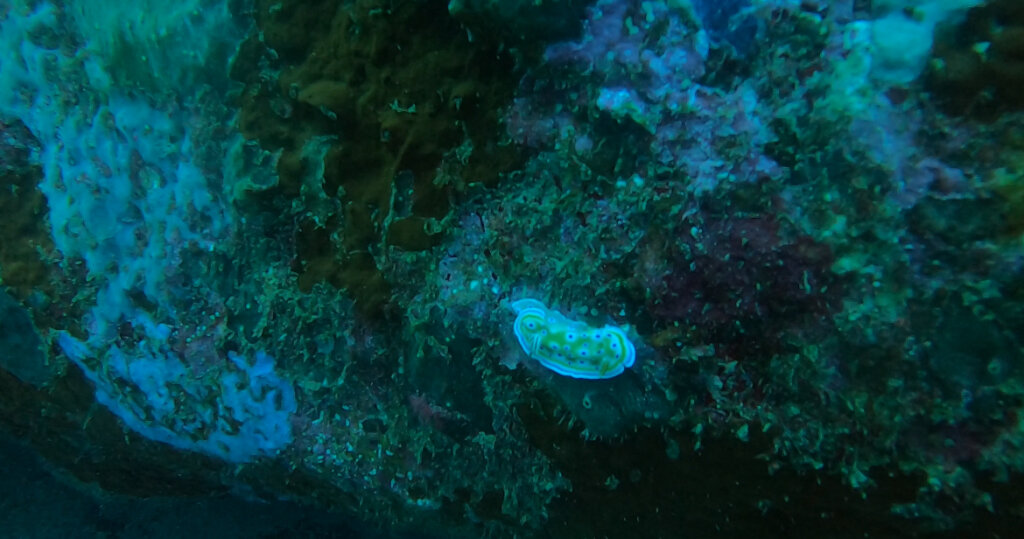
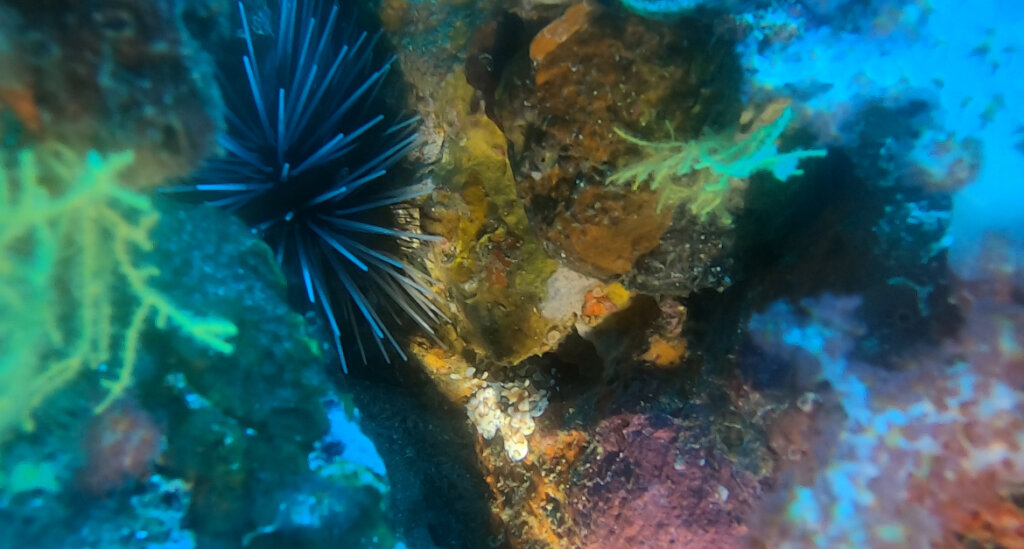
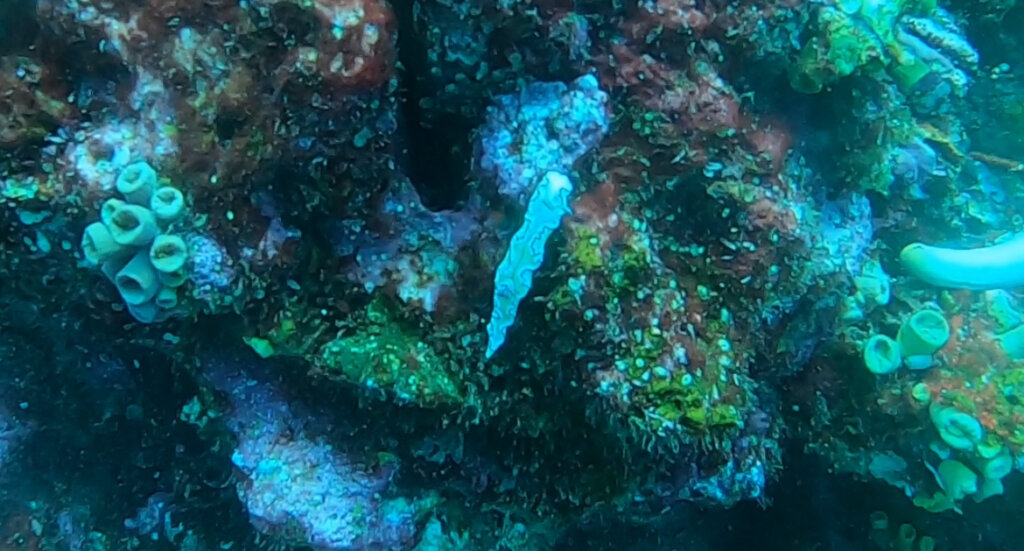
I felt proud of myself for being able to keep up with the advanced group. On both dives, we all made it to the full 50 minutes, which was exactly what I’d been hoping for. However, “be careful what you wish for” came into play during the next dive.
While gearing up, I found that my Rx dive mask was gone. Where the hell was it? I am practically blind without glasses/Rx mask, so there was kind of no point in diving if I couldn’t find it. Luckily, and bizarrely, the crew had a spare mask in my prescription I was able to use during that dive. I was able to get my mask returned to me later – someone else had grabbed it by mistake. I found it very annoying, though, because I had the mask clipped to my BCD so no one should have used it, in theory.
The next dive was a return to Batfish Rock, and this time the current was insane. Part of my good air consumption comes with the way I breathe underwater which, as someone once instructed me, is basically like “sipping through a straw.” Slow and light, not heavy/deep breaths. Well, with current, you have to kick your legs more. It’s a workout and you breathe a lot. In some instances, you can breathe through a ton of air in a very short amount of time.
During this dive, as Annie described later, it felt like we were kicking the entire time. For me, it wasn’t enjoyable. It was the first time in a very long time (ever?) where I actually felt panicked diving. The current felt really strong, we were constantly kicking against it, and… for me, it was not a pleasurable experience. I was also worried I would get low on air much faster than the others. I wanted the dive to be over. I prefer calm conditions underwater – although a slight drift can be really fun.
Our last dive of the day was at Tachai, the first dive site we’d visited a few days prior. Nothing too crazy to report there.
Somehow, we only had two days of diving left! Three more the following, and two on the last day.
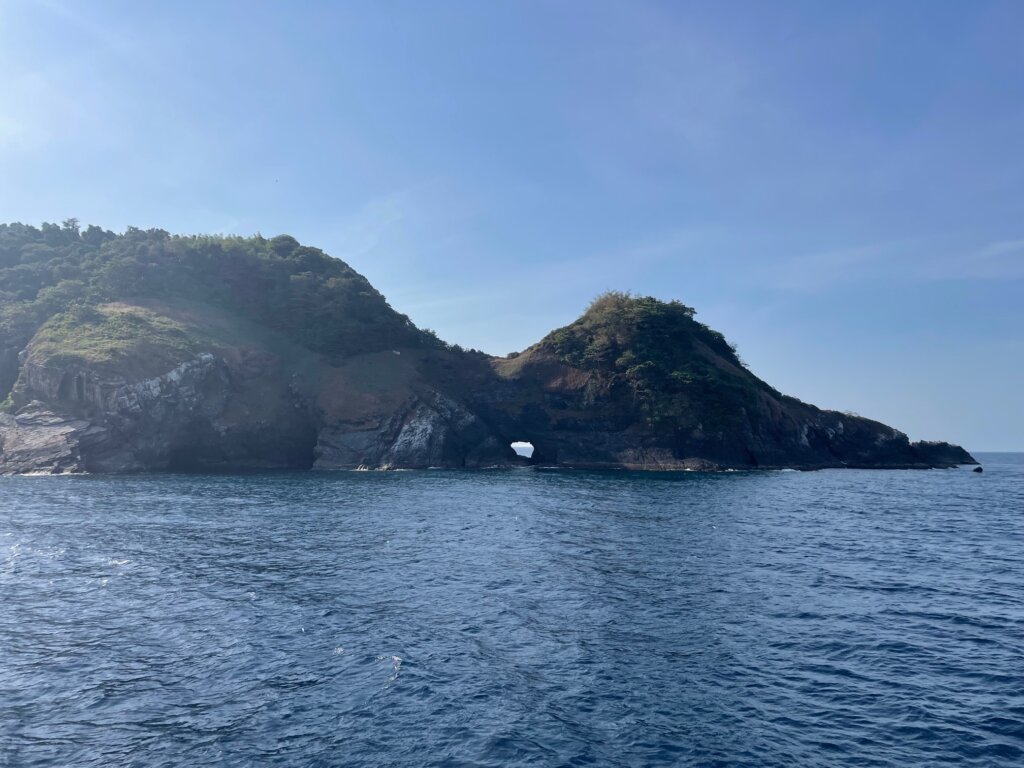
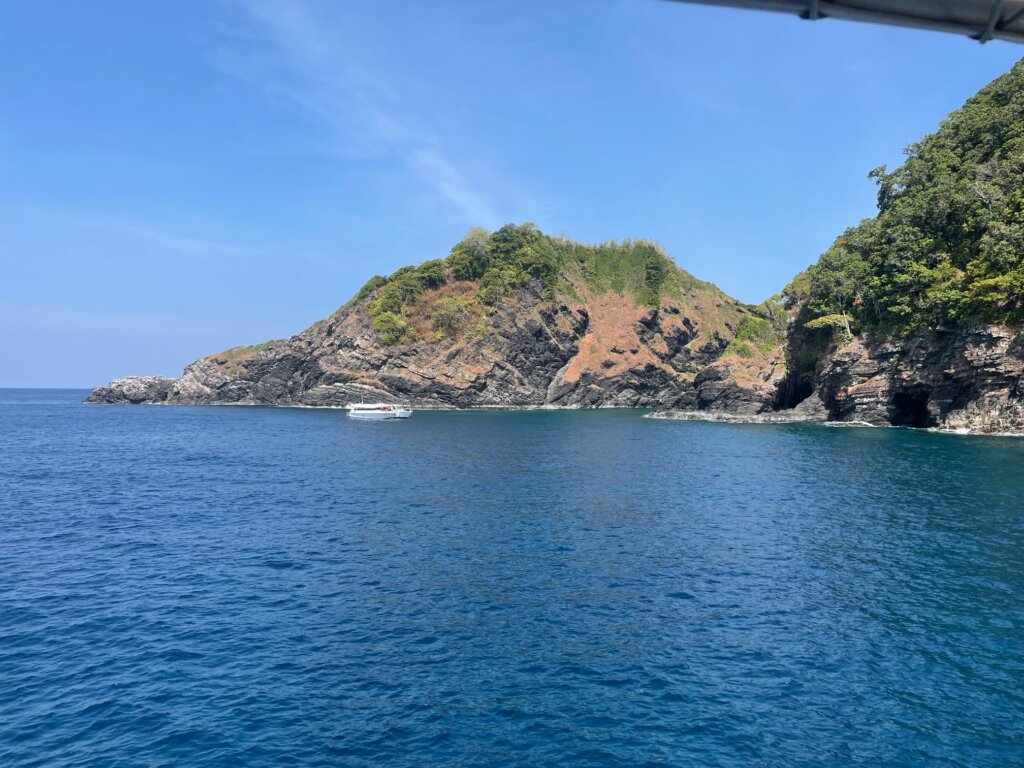
In the morning, we went to Koh Bon, another famous dive site. It is supposedly a good spot for sighting manta rays, but as Karlos shared, he hasn’t seen a manta ray in two years. Same with whale sharks – they are not quite as oft-sighted as people might claim them to be.
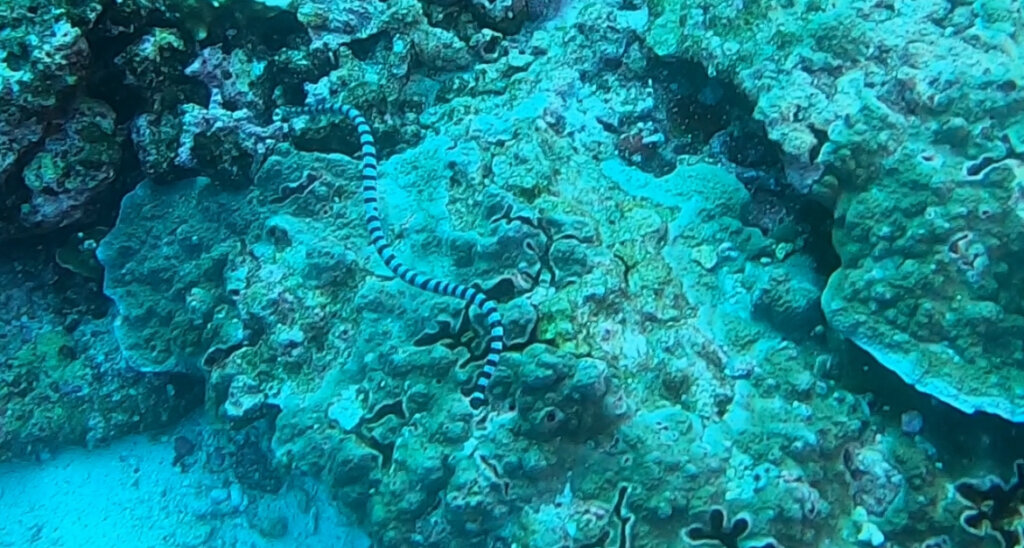
It was, however, a cool spot. We managed to see a sea snake (<3) and also a sponge snail, something I’d never seen before.
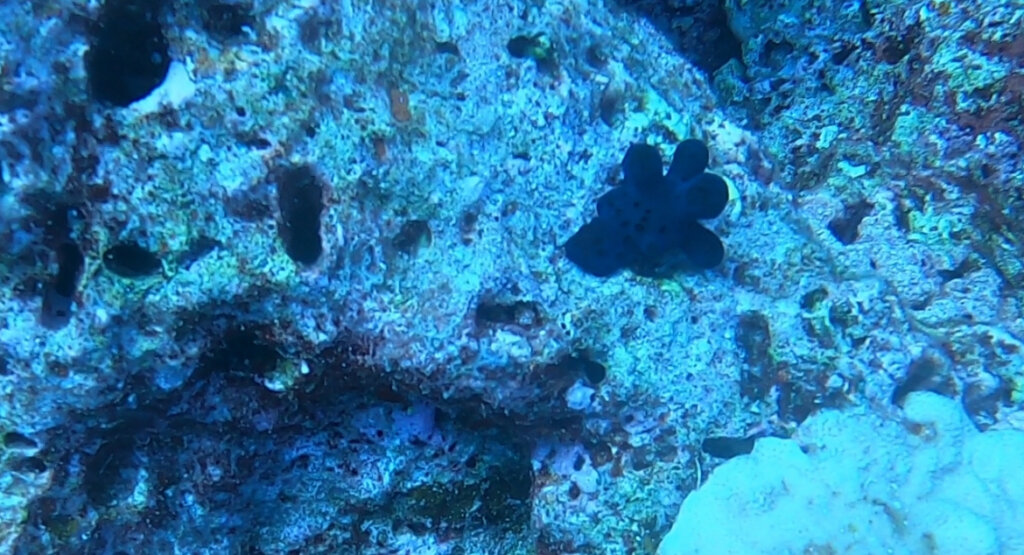
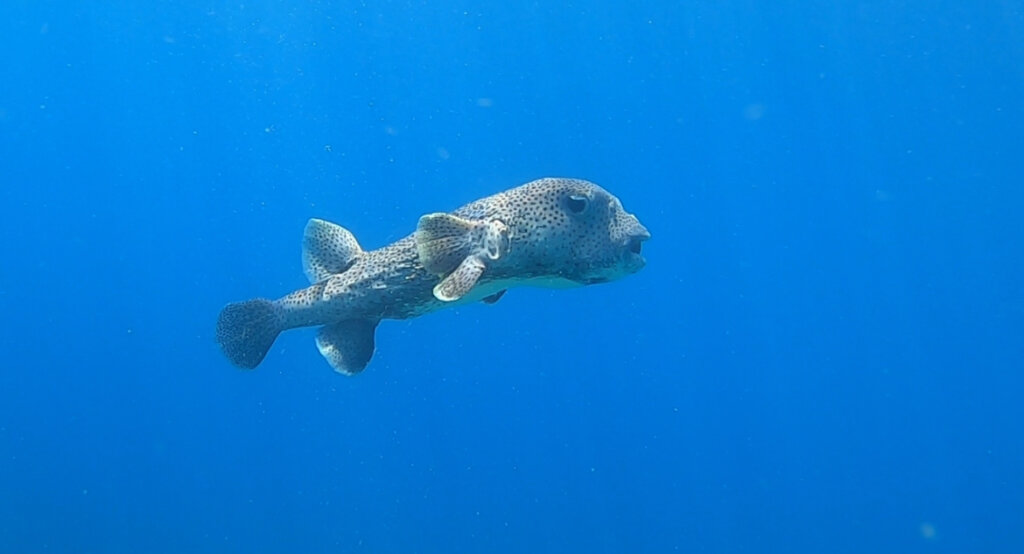
We had two dives at Koh Bon. On the second dive, I actually ended up getting cleaned by a cleaner wrasse hahaha. I felt a tug on my ear and when I looked behind me, I saw two little cleaner wrasse swirling around me. Cute! At the end of the dive, we spotted a big, friendly porcupinefish. I really love those guys. They have such goofy faces and sometimes they get awfully close. Pufferfish, too.
Our third dive site was at Similan Island #9, a site called Christmas Point. Once again, we were met with thermocline. That cold, COLD water and the “blurry” effect crossing into view. It happened right after we’d observed a hawksbill turtle floating towards the surface. All at once, the blur took over and the cold water hit us. Eek! A very interesting experience, though! That dive site also had a strong current, but I didn’t feel panicked in the way I had the day before. I think at this point, I felt like I “belonged” in the group – my air consumption allowed me to stay underwater for the duration of the dive, so I felt I could hang after all.
Final Moments on the Liveaboard
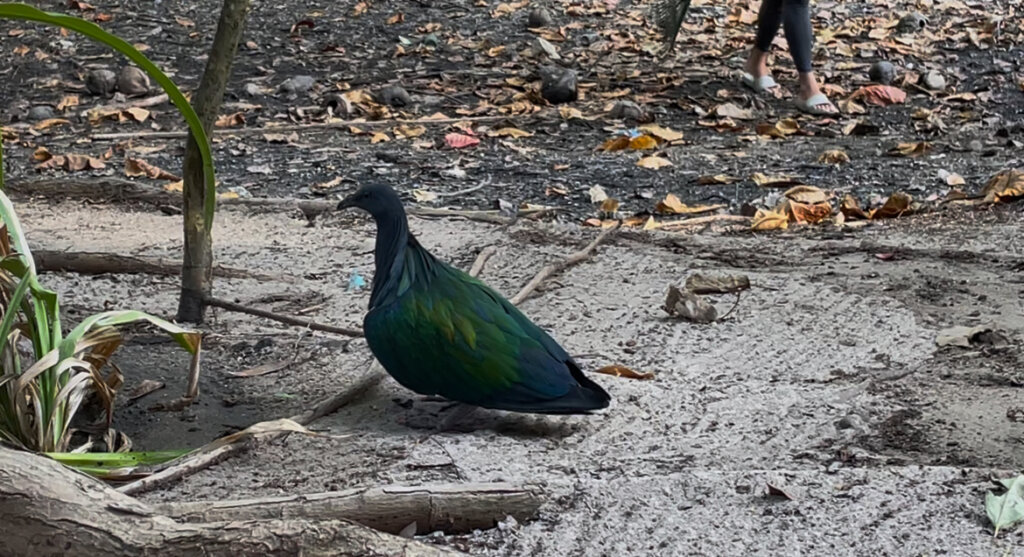
In the afternoon, we were brought to a different beach – this time, Similan Island #8. While there were no flying lemurs here, there were Nicobar pigeons – a bird species that apparently birdwatchers come specifically to see. Wild. I was happy I got to see it!
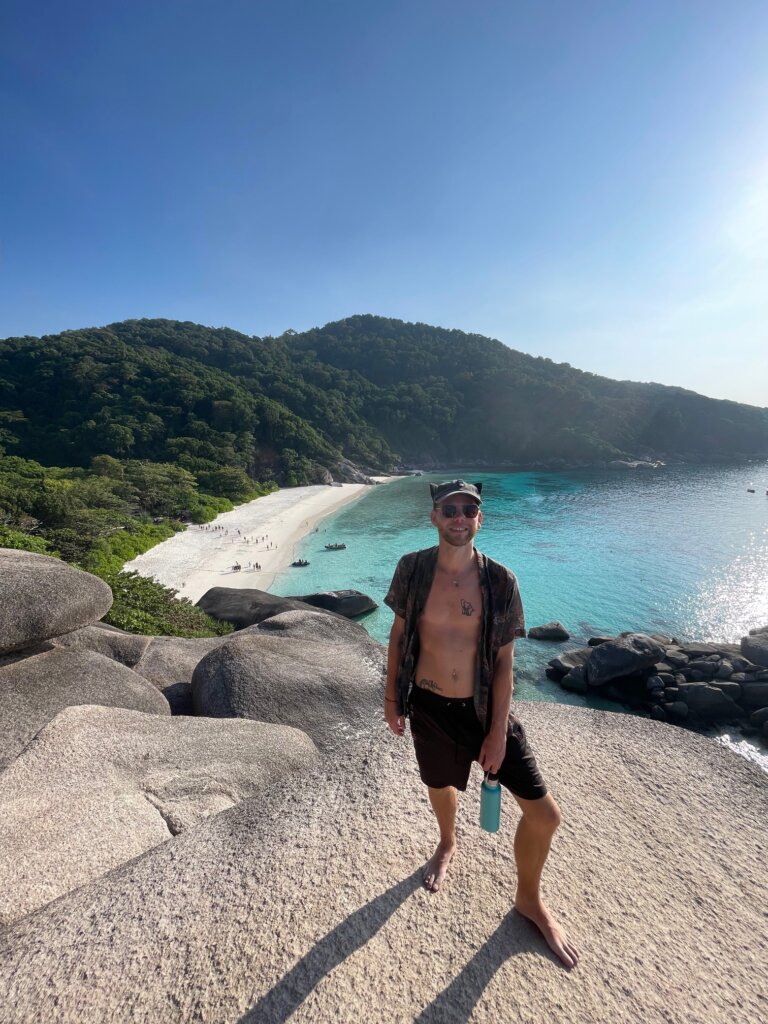
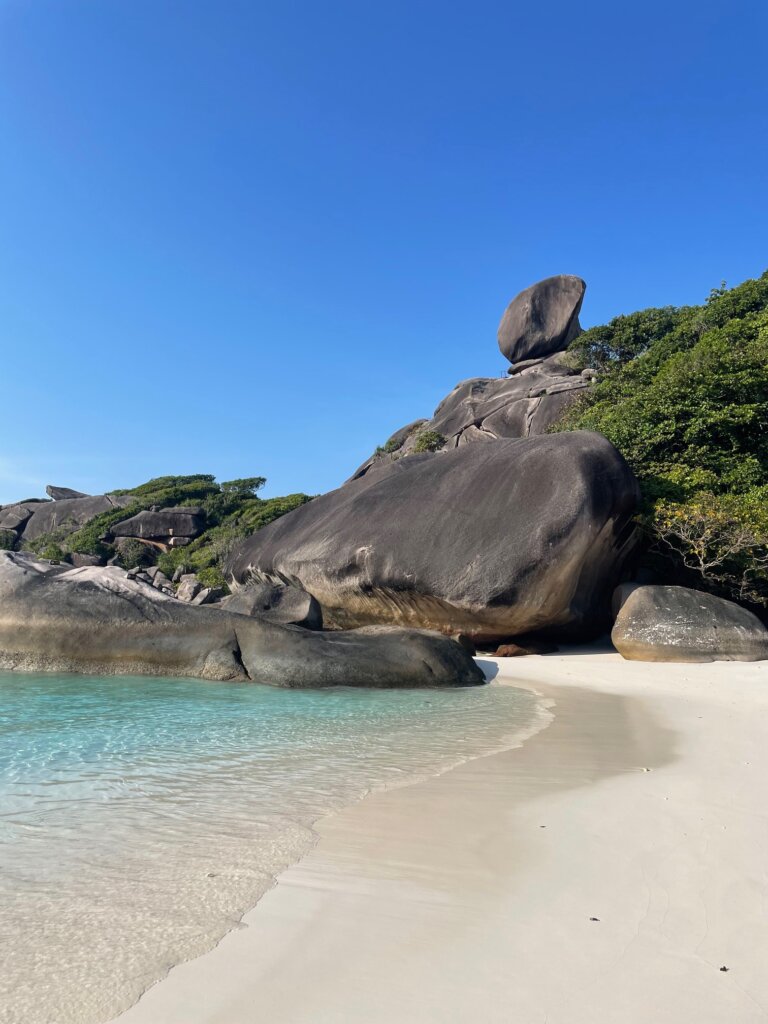
Our group was able to walk to a viewpoint over the beach, which I thought looked very beautiful. The water was so clear, the sand so soft and silky. We took turns taking photos of each other, admiring the view, and then walked back down.
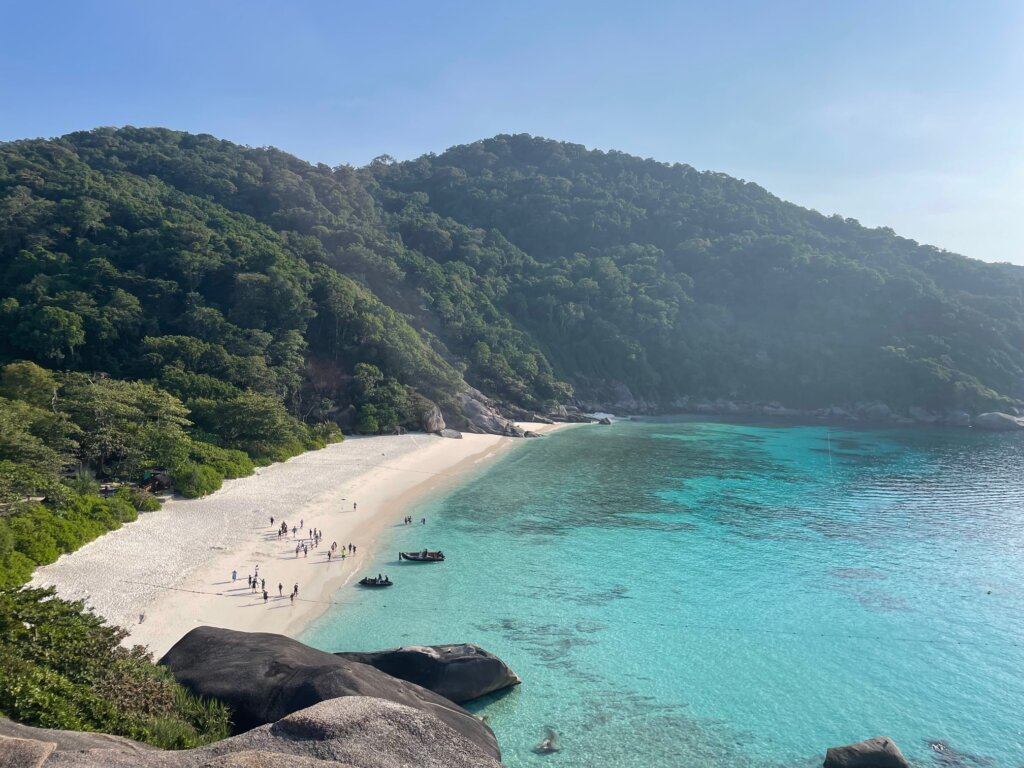
Later, Annie and I walked along the beach, looking at crabs and chatting. She kind of became my best buddy during the remainder of the liveaboard.
In the evening, we had another BBQ which meant… MORE MASHED POTATOES! Annie and I talked for a while that night – she shared all about the dives she has done. Galapagos, Red Sea, Fiji, Raja Ampat, Komodo, and more. Very impressive! It has been interesting to meet so many divers on this trip who are just truly passionate about diving. When they go on holiday, more often than not, it is strictly to dive. Some of these places are VERY expensive, too! Galapagos, for instance, is about USD$5,000 for 7 nights. Crazy! But also very remote and the marine life is world class. (Also, to note, majority of the diver clientele is middle-aged, balding white men haha. I suppose maybe I’ll be there too at some point!)
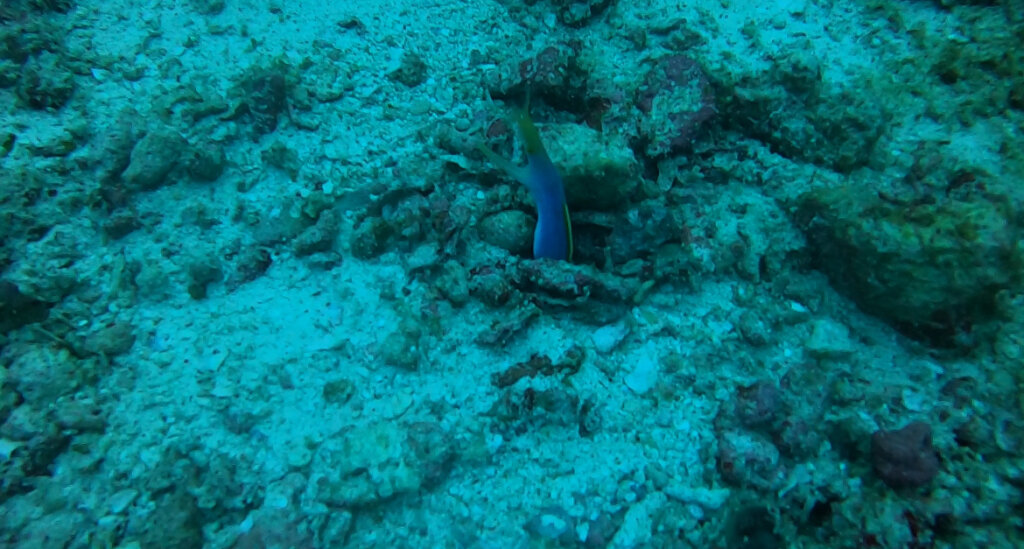
The next day, we only had two dives ahead of us. Our first was at Elephant Head Rocks. Here, we were able to see two very colorful ribbon eels. I’ve only seen ribbon eels once before and they came in the black color variation. These ones had blue and an orange-yyellow. Really colorful and, as eels go, cute! Weird critters. Oh, I saw so, so many eels during the liveaboard but these guys were unusual.
In between dives, we were greeted by a sea turtle who visited the boat along the surface. The crew told us people used to feed the turtles and so he still comes religiously. I saw one of the guests toss a piece of banana into the water… so apparently, the turtle continues to get fed, hence why it visits the boat. I hope it is still able to find food on its own and doesn’t rely 100% on guests tossing food into the water. Sigh.
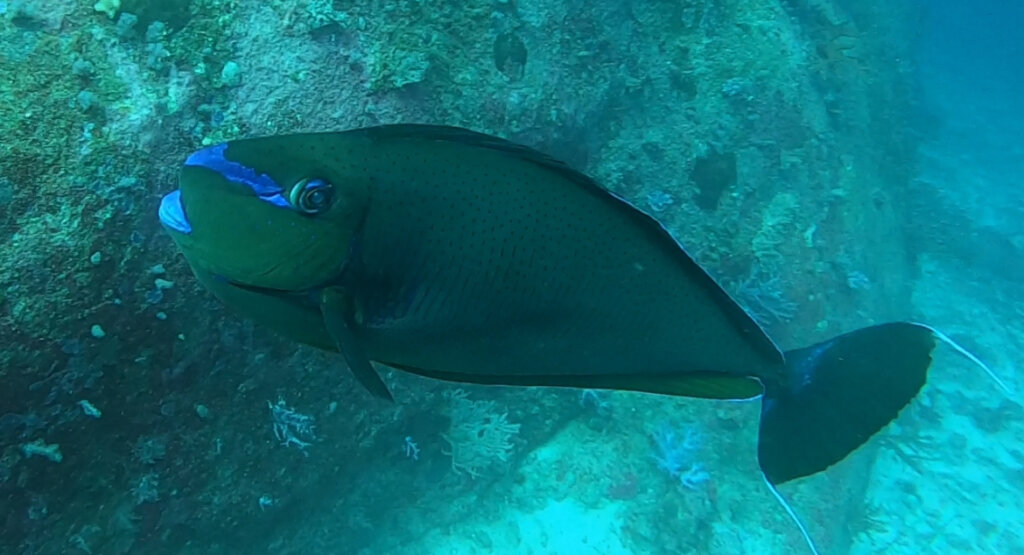
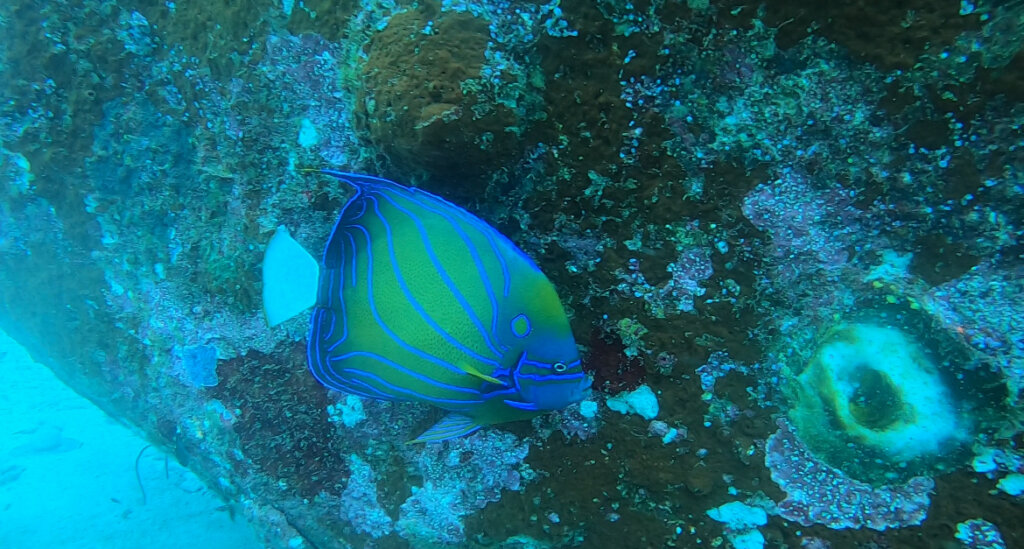
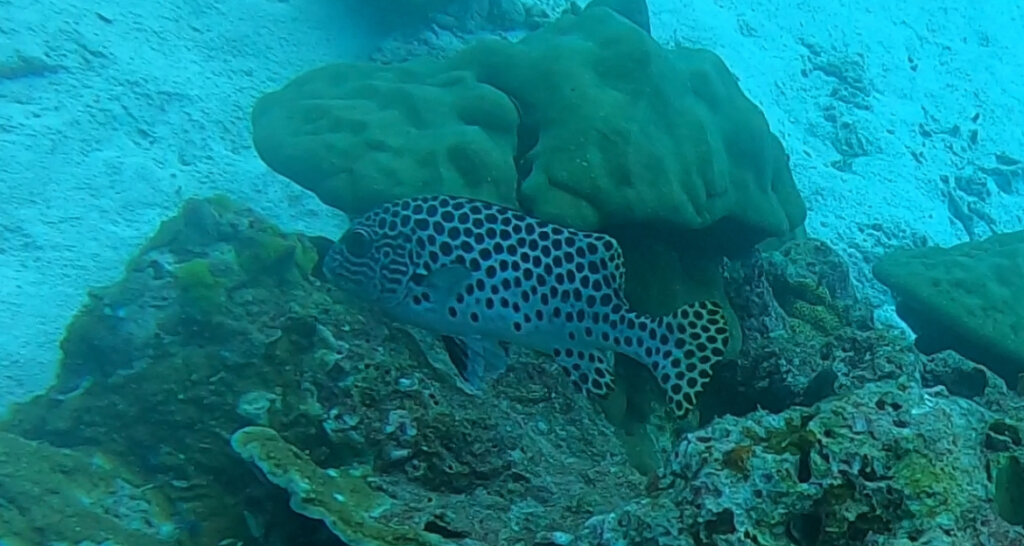
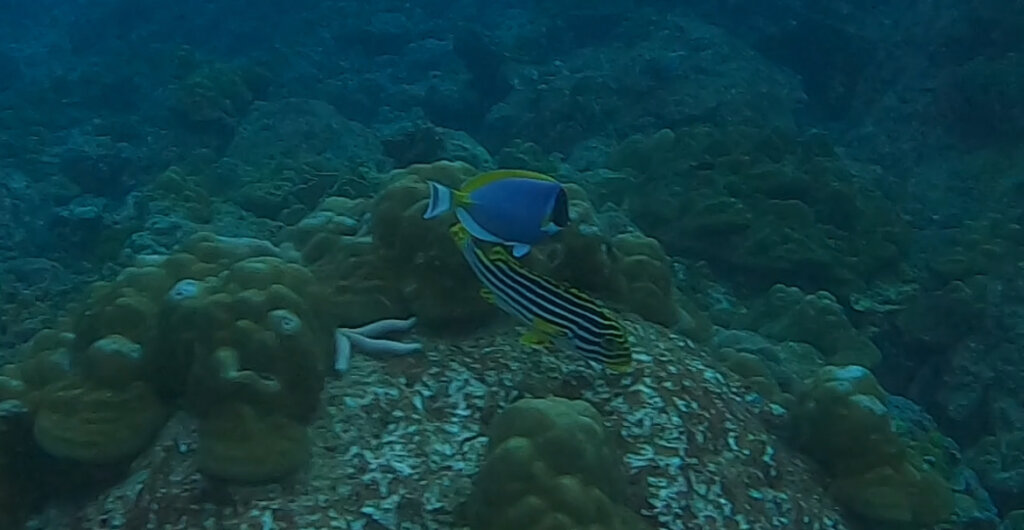
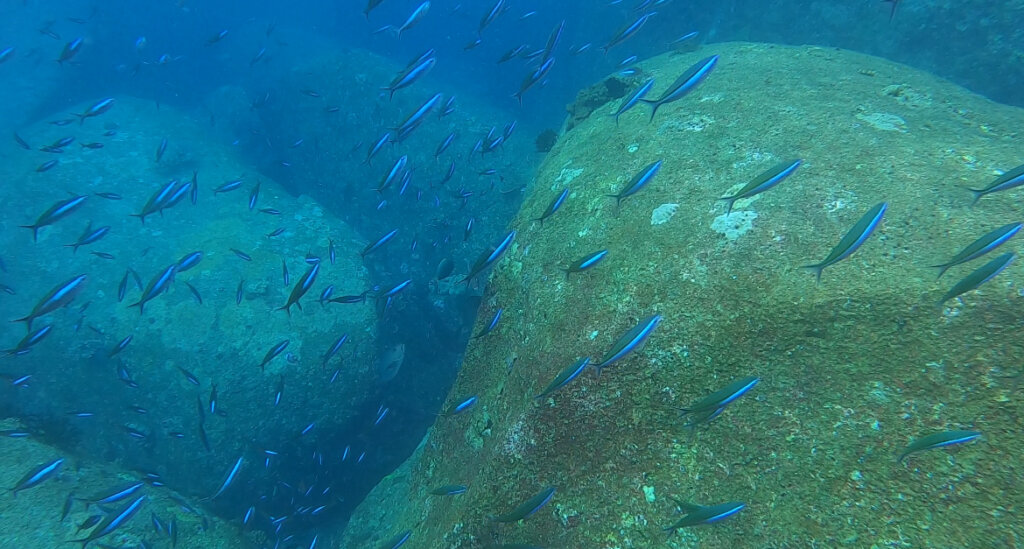
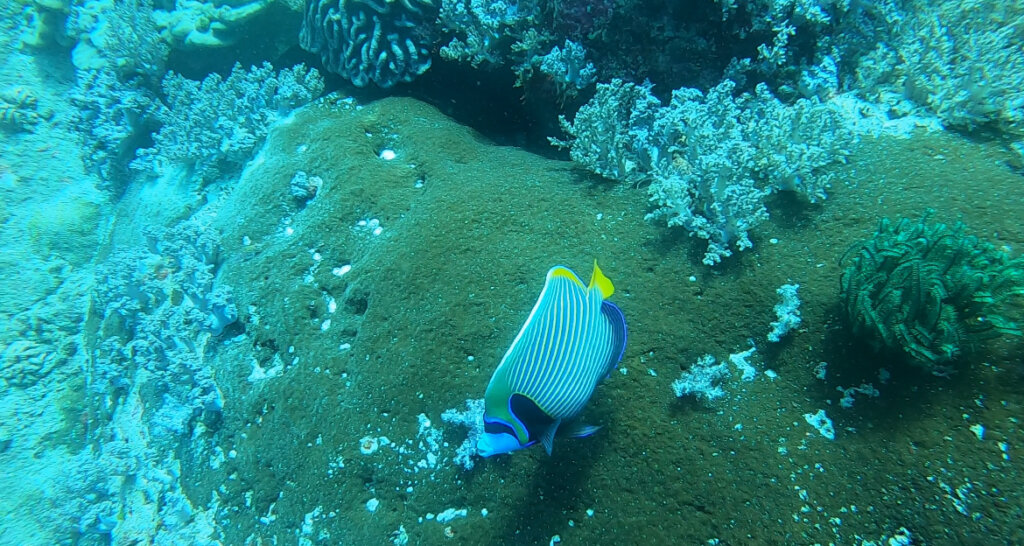
Our final dive of the trip was at a dive site called Amongst the Rocks. It was a truly perfect way to wrap up the seven day liveaboard. We saw so many of our fish friends along the way. One fish even came right up to me and circled around me a few times (shown above, with the blue stripe).
It was a really pleasant dive. As we swam along, I waved goodbye to all the creatures of the sea. I’m afraid it will be a long time before I’m underwater in Asia again.
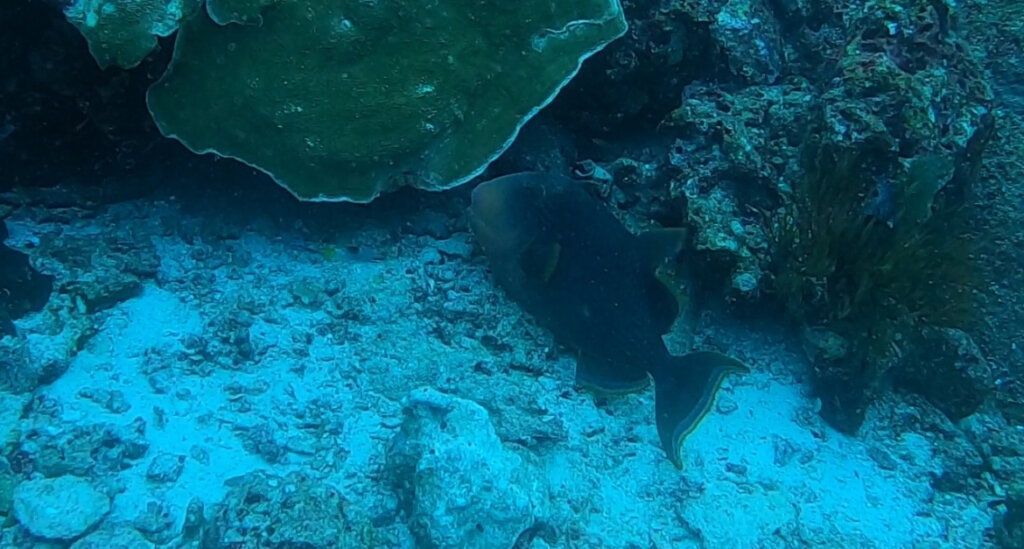
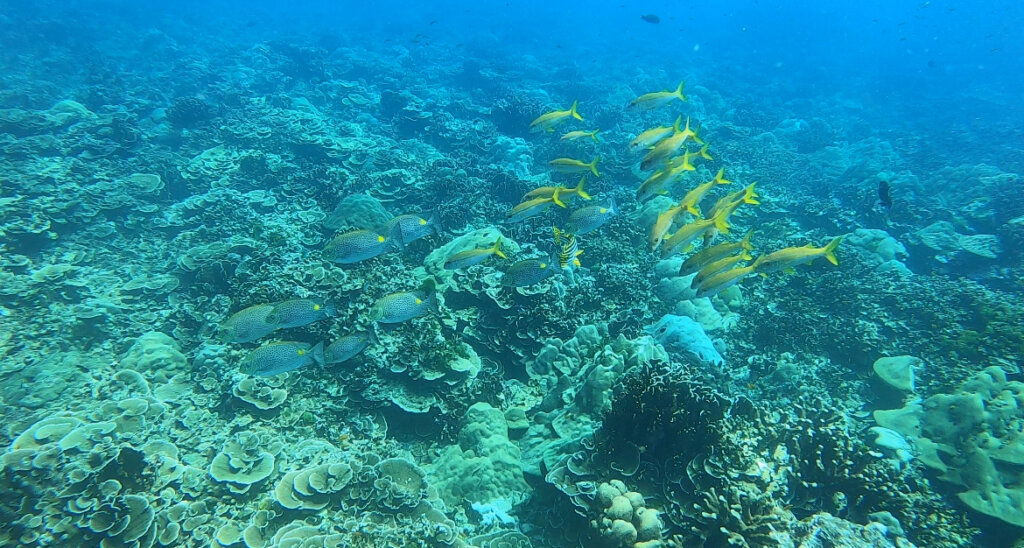
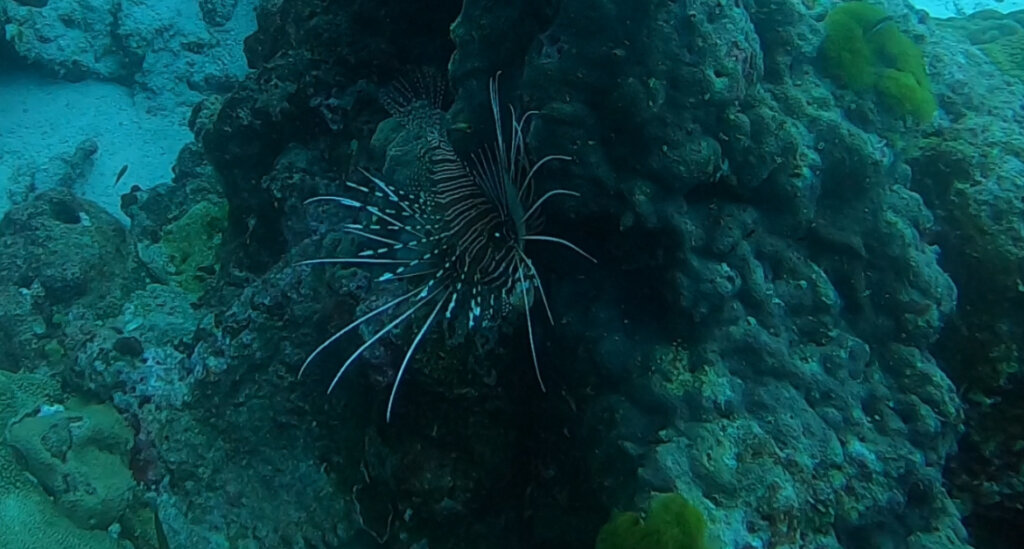
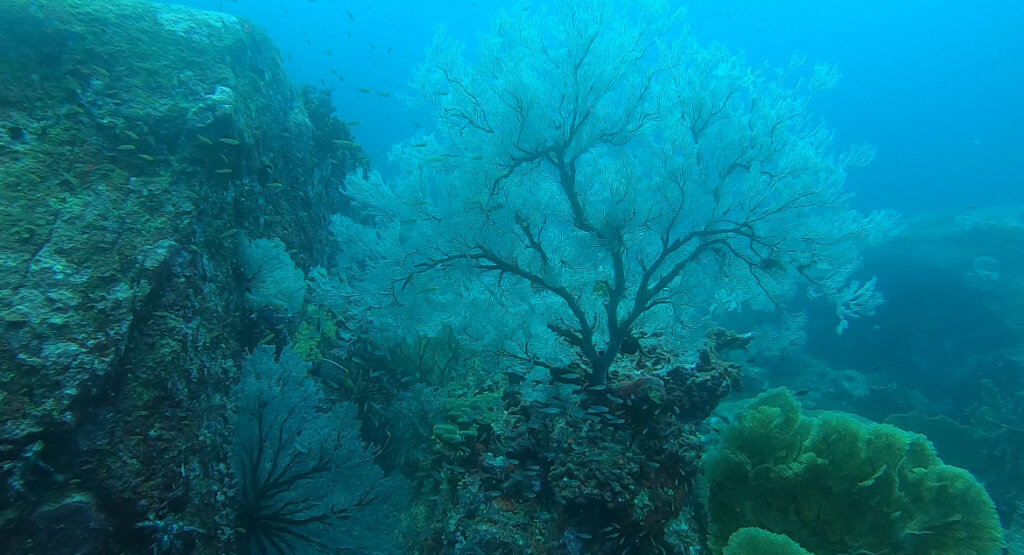
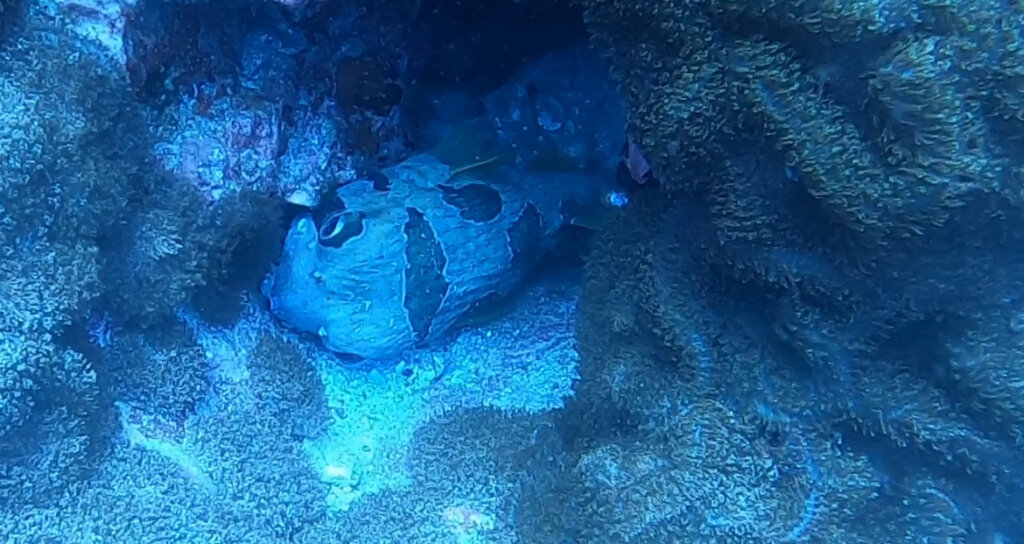
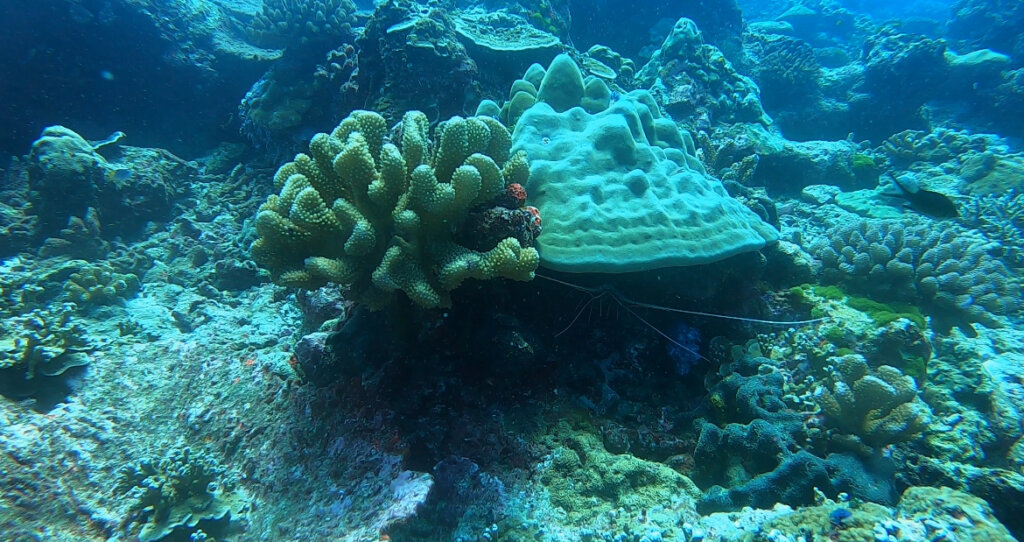
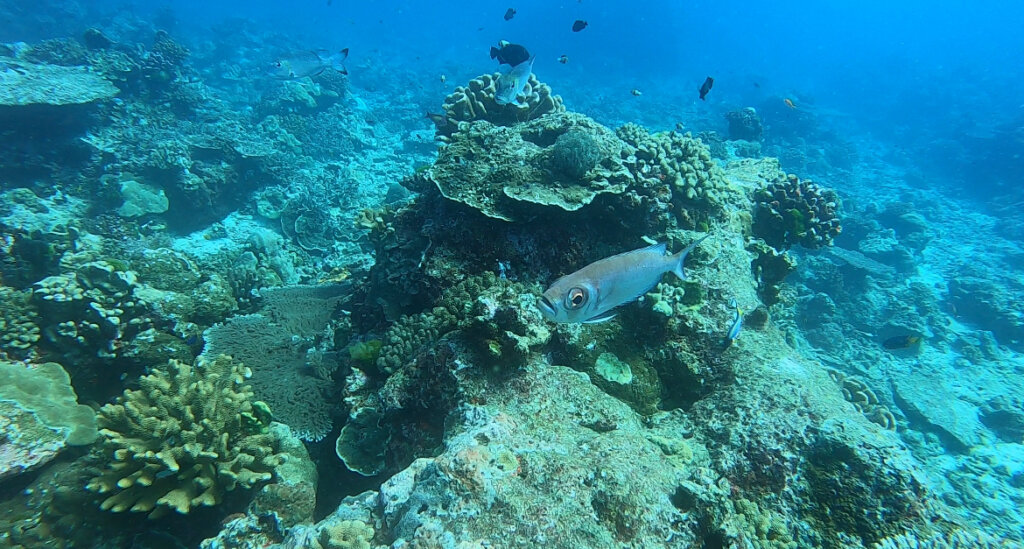
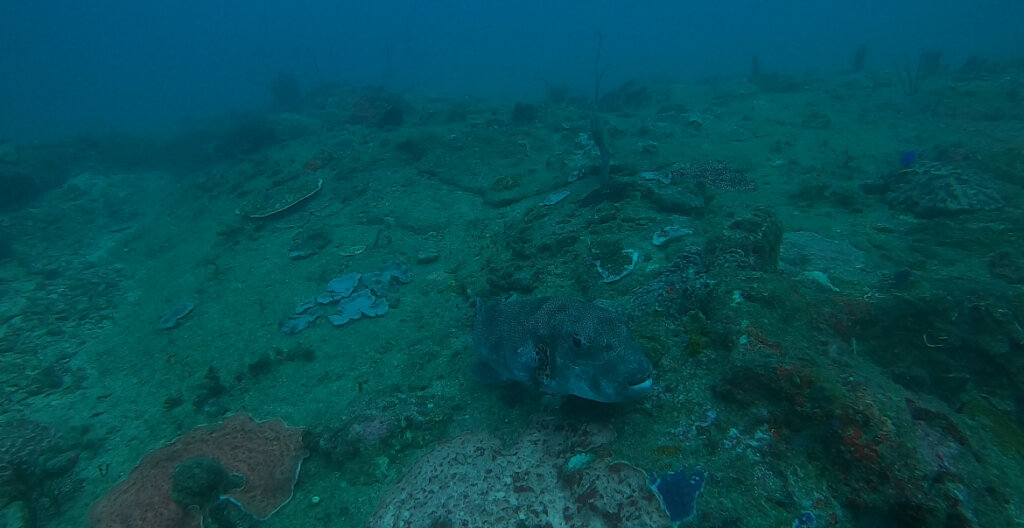
We managed to see not one, but two sea snakes on that final dive. And my last sighting was of a clown triggerfish – the closest I’ve ever seen one before.
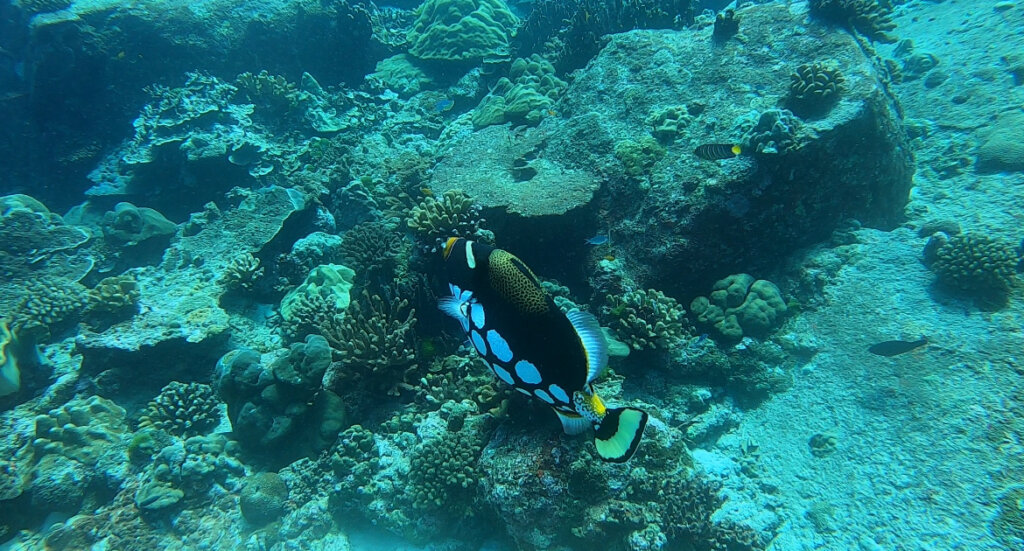
It was lovely.
And just like that, the diving portion was over.
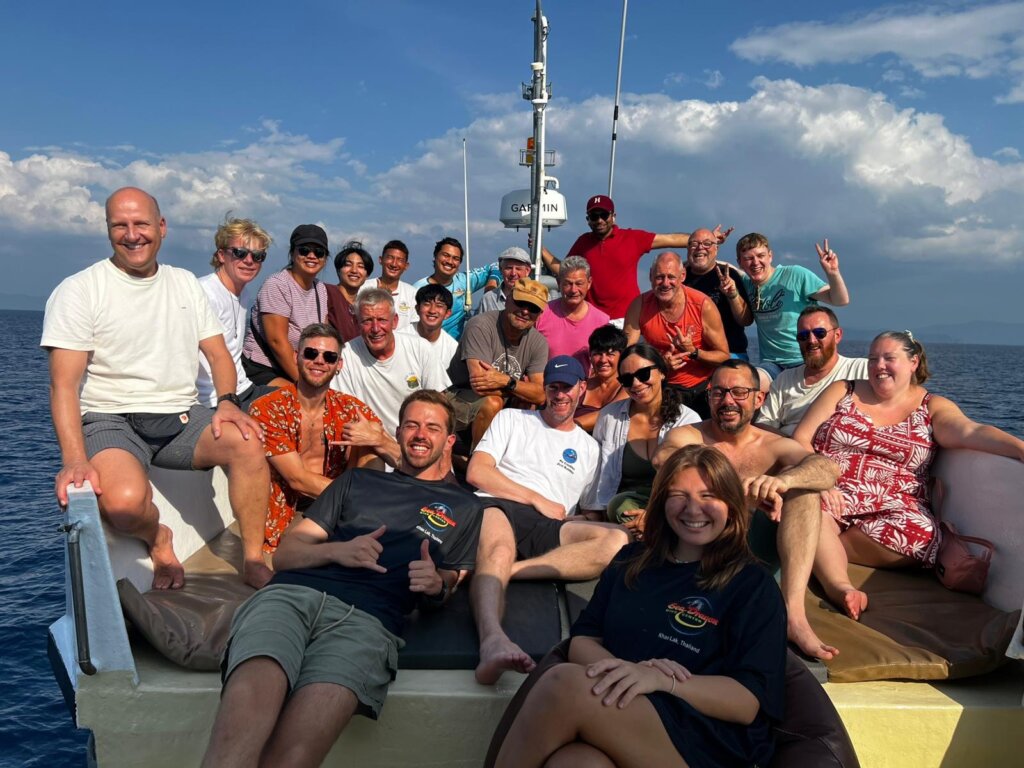
Exhausted and, getting over a cold like 1/2 the people on the boat, I rested in the shade on a beanbag, falling in and out of sleep the remainder of the afternoon.
As the boat got closer to the pier, I spotted a few monkeys and I THINK even dusky langurs hanging out on the beach. More creatures to say goodbye to.
We arrived at the dive center at 6pm, where we said our farewells. Annie and I hoped to see each other again one day, maybe on a dive liveaboard. That would be fun!
I hurried to my accommodation. After food and a shower, I needed to take full advantage of sleep. And so that’s what I did.
What an unforgettable trip! Sharks, octopus, eels, cuttlefish, barracuda, napoleon wrasse, nudibranchs, and so many more critters. I love being underwater and this was a great way to begin the end of my time in Thailand, and Asia.
Again – thank you to my parents for the gift they sent my way that helped to pay for this liveaboard!
Reflections
A week from today, I leave Asia. I’ve been here just about a year now. As I’ve said time and again, time is weird. Life is weird.
I was talking with my parents on the phone the other day, all three of us knowing that my time traveling abroad is rapidly coming to a close. They repeated what they’ve said before, how proud they are of me, how it seems like I’ve lived many lifetimes. I am proud, too. I set out with this goal and I accomplished it. I worked hard, made many sacrifices in order to be financially frugal, saved a shitload of money, and… I did it.
Over three years later, I spent a year in Australia, a year in Aoteroa New Zealand, and a year in Asia. It does feel like I’ve lived many lives. Even now, I get fleeting glimpses of things I’ve done in Australia, in New Zealand. It feels like a dream. Another life ago. But I’m sure when I’m back home, it will all marry together and make more sense. As of now, those glimpses are brief because, well, I’m constantly under new stimuli. New sights, new activities, new objectives while traveling, etc. There’s not much time to reminisce over everything I’ve experienced. Sooner than later, though, I’ll be in a more stable spot and I can enjoy the memories as they wash over me.
Wild.
One more week.
I’m currently waiting for a train to take me from Chumphon to Hua Hin, where I’ll stay for a few nights. After that is Bangkok, where I’ll be until I leave Thailand.
Winding down now.
Until next time, sending you all my love. x